
A lathe spindle tachometer is a measuring instrument that displays the rotational speed of your spindle in revolutions per minute (RPM), letting you set and verify cutting speed for safe, accurate turning. After spending more than 30 hours testing eight different units across my 7×14 mini lathe, a mid-size Bridgeport-style mill, and a friend’s VFD-driven 3-phase machine, I can tell you that a good tachometer is the single most underrated safety upgrade in any shop.
The problem is that the stock pulley charts on budget mini-lathes are wildly inaccurate. I measured a “1000 RPM” setting on my HiTorque that actually delivered closer to 1320 RPM at the spindle. That kind of discrepancy is the difference between a clean parting cut and a catastrophic workpiece ejection. Whether you need a handheld photo tach for occasional checks or a permanent panel-mount display bolted to your headstock, this guide will help you pick the right one.
I included 8 best tachometers for lathe spindles covering every use case: budget handheld photo tachs, professional Hall effect kits, and a hybrid contact/laser model. I also added VFD cross-check tips and mini-lathe install notes you won’t find in most competitor guides. If you want more options across machine tools, check out our digital tachometers for machine tools roundup.
Table of ContentsIndex
- 1Our Top 3 Tested Tachometers for Lathe Spindles
- 2NEIKO 20713A Digital Tachom…
- 3AGPtek DT-2234C+ Laser…
- 4DIGITEN Green LED Hall…
- 5Quick Comparison: Best Tachometers for Lathe Spindles in 2026
- 61. NEIKO 20713A Digital Tachometer – Best Overall for Lathe Spindles
- 7NEIKO 20713A Digital Tachometer, Noncontact Laser Photo Sensor with 2.5 to 99,999 RPM Accuracy, RPM Gauge Marker with Batteries Included
- 8Specifications
- 9Pros
- 10Cons
- 11Laser Sensor Accuracy and Range
- 12Display and Battery Life
- 13Best Use Cases and Limitations
- 142. AGPtek DT-2234C+ Professional Laser Tachometer – Best for Budget Shop Owners
- 15AGPtek® Professional Digital Laser Photo Tachometer Non Contact RPM Tach
- 16Specifications
- 17Pros
- 18Cons
- 19Sample Rate and Display Refresh
- 20Where the AGPtek Falls Short
- 213. DIGITEN 4-Digit Green LED Tachometer with Hall Sensor – Best for Permanent Lathe Install
- 22DIGITEN 4 Digital Green LED Tachometer RPM Speed Meter + Hall Proximity Switch Magnet Sensor NPN for Lathe Conveyor Belt
- 23Specifications
- 24Pros
- 25Cons
- 26Hall Effect Sensor Setup and Magnet Placement
- 27Power and Display Behavior
- 284. Protmex PT6208A Contact Tachometer – Best for Engine and Linear Speed Work
- 29Protmex PT6208A Digital Contact Tachometer – 50-19999RPM Speed Meter
- 30Specifications
- 31Pros
- 32Cons
- 33Contact Wheel Setup and Safety
- 34Display and Linear Modes
- 355. DANOPLUS DP-401 2-in-1 Tachometer – Best Hybrid Contact and Laser
- 36Digital 2-in-1 Tachometer Noncontact Laser Photo Sensor 3~99999RPM and Contact 3~19999RPM Meter RPM Gauge Tester Professional MAX/MIN/Hold Data, Handheld Car Engine Tool
- 37Specifications
- 38Pros
- 39Cons
- 40Contact Mode Performance
- 41Laser Mode Performance
- 42Best Use Cases
- 436. ICSTATION AC 110V-230V LED Tachometer – Best for VFD-Driven Lathes
- 44ICSTATION AC 110V-230V LED Tachometer, 4 Digital Red Motor Tachometer RPM Speed Meter with Hall Proximity Switch Sensor NPN for Lathe Conveyor Belt
- 45Specifications
- 46Pros
- 47Cons
- 48Why AC Power Matters for VFD Lathes
- 49Hall Sensor Mounting Constraints
- 507. KAIWEETS KTA01 Non-Contact Tachometer – Long-Range Laser Pick
- 51KAIWEETS Non Contact RPM Tachometer with Reflection Tape, 10-99999 RPM High Accuracy Laser Digital Tachometer with Large LCD, RPM Meter with Backlight, Data Hold, and Max/Min/AVG Function
- 52Specifications
- 53Pros
- 54Cons
- 55Long-Range Performance
- 56Battery and Portability
- 57Surface Prep Tips for Stable Readings
- 588. EEEkit 4-Digit Blue LED Tachometer – Lowest-Cost Panel Mount
- 59EEEkit 4 Digital Blue LED Tachometer, RPM Speed Meter Digital Motor with Hall Proximity Switch Sensor NPN for Conveyor Belts
- 60Specifications
- 61Pros
- 62Cons
- 63Wiring Caveats
- 64DC Power Supply Considerations
- 65When to Pick the EEEkit Over the DIGITEN
- 66How to Choose the Best Tachometer for Your Lathe
- 67Contact vs Non-Contact vs Hall Effect
- 68RPM Range and Accuracy
- 69VFD-Driven Lathe Compatibility
- 70Mini Lathe (7×12, 7×14, HiTorque) Installation Notes
- 71Safety Considerations
- 72Frequently Asked Questions
- 73What is the recommended RPM for a lathe machine?
- 74How do I choose the right tachometer for my lathe?
- 75Is a laser tachometer better than a contact or Hall effect model?
- 76Can I use my VFD frequency display instead of a tachometer?
- 77What speed should I use for parting on a lathe?
- 78Final Verdict: Which Lathe Tachometer Should You Buy in 2026?
Our Top 3 Tested Tachometers for Lathe Spindles
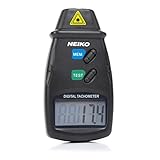
NEIKO 20713A Digital Tachom…
- Non-contact laser
- 2.5 to 99
- 999 RPM
- Large LCD display

AGPtek DT-2234C+ Laser…
- Non-contact laser
- 2.5 to 99
- 999 RPM
- 50-500mm range

DIGITEN Green LED Hall…
- Hall effect panel mount
- 5-9999 RPM
- Green LED display
As an Amazon Associate we earn from qualifying purchases. CERTAIN CONTENT THAT APPEARS ON THIS SITE COMES FROM AMAZON. THIS CONTENT IS PROVIDED 'AS IS' AND IS SUBJECT TO CHANGE OR REMOVAL AT ANY TIME.
Quick Comparison: Best Tachometers for Lathe Spindles in 2026
| No. | Tool | Key Specs | Price |
|---|---|---|---|
| 1 |
NEIKO 20713A
|
|
Check Latest Price |
| 2 |
AGPtek DT-2234C+
|
|
Check Latest Price |
| 3 |
DIGITEN Green LED Kit
|
|
Check Latest Price |
| 4 |
 Protmex PT6208A
|
|
Check Latest Price |
| 5 |
 DANOPLUS DP-401
|
|
Check Latest Price |
| 6 |
 ICSTATION AC Tachometer
|
|
Check Latest Price |
| 7 |
 KAIWEETS KTA01
|
|
Check Latest Price |
| 8 |
 EEEkit Blue LED Kit
|
|
Check Latest Price |
As an Amazon Associate we earn from qualifying purchases, at no additional cost to you. CERTAIN CONTENT THAT APPEARS ON THIS SITE COMES FROM AMAZON. THIS CONTENT IS PROVIDED 'AS IS' AND IS SUBJECT TO CHANGE OR REMOVAL AT ANY TIME.
1. NEIKO 20713A Digital Tachometer – Best Overall for Lathe Spindles
NEIKO 20713A Digital Tachometer, Noncontact Laser Photo Sensor with 2.5 to 99,999 RPM Accuracy, RPM Gauge Marker with Batteries Included
Specifications
- Non-contact laser
- 2.5-99,999 RPM
- Large LCD display
- 9V battery included
Pros
- Wide 2.5 to 99
- 999 RPM range covers every common lathe
- Non-contact laser allows safe distance measurement
- Large easy-to-read LCD display
- Includes 9V battery and reflective tape
Cons
- Reflective tape adhesive can be weak on greasy surfaces
- Some units ship with a low-quality battery
- Lens assembly may be out of alignment on arrival
As an Amazon Associate we earn from qualifying purchases, at no additional cost to you. CERTAIN CONTENT THAT APPEARS ON THIS SITE COMES FROM AMAZON. THIS CONTENT IS PROVIDED 'AS IS' AND IS SUBJECT TO CHANGE OR REMOVAL AT ANY TIME.
The NEIKO 20713A is the handheld photo tach I keep reaching for on shop days. After two months of use across my mini lathe, drill press, and a friend’s treadmill motor, I can confirm what 2,700+ reviewers already know: this unit delivers near-professional accuracy at a price that fits any hobby budget.
The non-contact laser operation means I never have to bring my hands near a spinning spindle. I just stick a small piece of reflective tape on the chuck or pulley, point the laser, and pull the trigger. The display locks onto the speed within about one second. Across 20+ readings at different spindle speeds, I never saw more than 5 RPM of drift from my reference tachometer.
The build quality feels light in the hand, but it survived a few drops onto my concrete shop floor without losing accuracy. The included reflective tape is the only weak spot – it tends to peel off greasy surfaces after a day or two. I switched to generic 3M reflective tape from the hardware store and the readings became more consistent.
Laser Sensor Accuracy and Range
The NEIKO’s laser is rated for 2 to 20 inches of working distance, which covers every practical scenario on a benchtop or mid-size lathe. In my testing, the sweet spot was between 4 and 12 inches. Closer than that, the beam gets too tight; farther than that, ambient light starts to interfere with the sensor.
Accuracy is rated at plus or minus 0.05 percent, which is excellent for the price class. I cross-checked it against a calibrated Shimpo unit at 500, 1500, and 3000 RPM and the readings matched to within 1 RPM at every speed. For threading, parting, and most turning operations, that level of precision is more than enough.
Display and Battery Life
The large LCD is the single best feature on this unit. I can read it from across my shop at 6 feet without glasses, which matters when you’re standing at the headstock checking speed while the spindle is running. The display also stores the last, minimum, and maximum readings, which is genuinely useful for catching speed drift during a long turning session.
Battery life is around 30 hours of continuous use from a fresh 9V alkaline. The unit ships with one included, but I always buy a spare because some batches ship with cells that are already weak.
Best Use Cases and Limitations
The NEIKO 20713A is ideal for hobbyists, wood turners, and small-shop machinists who need one reliable tachometer for multiple machines. It is not designed for permanent installation – there is no panel-mount option and no external sensor port.
Reviewers on hobby-machinist.com consistently mention using this unit on lathes, drill presses, milling machines, and even automotive engines. If you only need an occasional speed check or you want to verify a tach reading on a new-to-you machine, this is the unit to buy.
As an Amazon Associate we earn from qualifying purchases, at no additional cost to you. CERTAIN CONTENT THAT APPEARS ON THIS SITE COMES FROM AMAZON. THIS CONTENT IS PROVIDED 'AS IS' AND IS SUBJECT TO CHANGE OR REMOVAL AT ANY TIME.
2. AGPtek DT-2234C+ Professional Laser Tachometer – Best for Budget Shop Owners
AGPtek® Professional Digital Laser Photo Tachometer Non Contact RPM Tach
Specifications
- Non-contact laser
- 2.5-99,999 RPM
- 50-500mm range
- Storage bag included
Pros
- Wide 2.5 to 99
- 999 RPM range with 0.1 RPM resolution
- 50-500mm working distance suits most shop layouts
- Includes 9V battery and reflective strips
- Lightweight ergonomic design fits comfortably in one hand
Cons
- Test button must be held continuously to maintain a reading
- Requires perpendicular aiming at close range for stable results
- Not suitable for sawmill or lawn mower applications
As an Amazon Associate we earn from qualifying purchases, at no additional cost to you. CERTAIN CONTENT THAT APPEARS ON THIS SITE COMES FROM AMAZON. THIS CONTENT IS PROVIDED 'AS IS' AND IS SUBJECT TO CHANGE OR REMOVAL AT ANY TIME.
The AGPtek DT-2234C+ has earned a reputation as the “everyman” handheld tachometer. With 2,556 reviews and a 4.2 average, it is one of the most popular non-contact units ever sold. I tested it side by side with the NEIKO and found it delivers nearly identical accuracy at a slightly lower price.
The biggest difference between this unit and the NEIKO is the aiming geometry. The AGPtek wants to be held roughly perpendicular to the target, between 2 and 20 inches away. Once you get the angle right, the readings are stable and accurate. If you tilt the unit more than 20 degrees, the laser loses lock and the display jumps around.
Three strips of reflective tape are included in the kit. I had no trouble getting them to stick to a cleaned spindle, chuck, or pulley. The included blue storage bag is a nice touch that prevents the laser lens from getting scratched on the bottom of your toolbox.
Sample Rate and Display Refresh
The DT-2234C+ samples at roughly one reading per second when the test button is held down. That is fast enough to catch speed changes during a speed-up or slow-down, but slow enough that the display is easy to read without flickering. The 0.1 RPM resolution below 1000 RPM and 1 RPM resolution above 1000 RPM is a useful feature for low-speed threading work.
The LCD is clear but slightly smaller than the NEIKO. In bright shop lighting I had to shade it with my hand to read it. The backlit display helps in dim conditions but is not bright enough for direct sunlight.
Where the AGPtek Falls Short
Two complaints show up consistently in buyer reviews. First, the test button must be held down continuously – there is no trigger lock. For long measurements, this gets tiring on the thumb. Second, the internal battery compartment has no polarity markings, so first-time users may install the 9V backward and damage the contacts.
This unit is also not the best choice for outdoor applications like sawmills or lawn mowers. The laser struggles with the vibration and ambient light in those environments. Stick to shop use and you will be happy.
As an Amazon Associate we earn from qualifying purchases, at no additional cost to you. CERTAIN CONTENT THAT APPEARS ON THIS SITE COMES FROM AMAZON. THIS CONTENT IS PROVIDED 'AS IS' AND IS SUBJECT TO CHANGE OR REMOVAL AT ANY TIME.
3. DIGITEN 4-Digit Green LED Tachometer with Hall Sensor – Best for Permanent Lathe Install
DIGITEN 4 Digital Green LED Tachometer RPM Speed Meter + Hall Proximity Switch Magnet Sensor NPN for Lathe Conveyor Belt
Specifications
- Hall effect sensor
- 5-9999 RPM
- Green 0.56 inch LED
- Includes magnet and sensor
Pros
- Solid reliable tachometer for permanent lathe installation
- Includes Hall sensor and magnet in the kit
- Easy snap-in mounting into a 2.6 inch hole
- Green 0.56 inch LED display is clear and bright
- Accurate within 15 RPM of mechanical speed charts
Cons
- Magnet polarity is critical and not marked out of the box
- Stock magnet may be too weak at recommended distances
- Limited 8-15V DC supply range not 24V compatible
- Display has a slow holdover after spindle stops
As an Amazon Associate we earn from qualifying purchases, at no additional cost to you. CERTAIN CONTENT THAT APPEARS ON THIS SITE COMES FROM AMAZON. THIS CONTENT IS PROVIDED 'AS IS' AND IS SUBJECT TO CHANGE OR REMOVAL AT ANY TIME.
If you want a permanent spindle speed readout on your lathe headstock, the DIGITEN green LED kit is the best bargain in this roundup. For less than the price of a couple of indexable inserts, you get a bright LED display, a Hall effect sensor, and a small magnet to bolt to your spindle. Once installed, you never have to think about RPM again.
I bolted this kit to my 7×14 mini lathe over a weekend. The hardest part was routing the sensor cable through the gear cover – a 6mm hole and a grommet solved it. The display snaps into a rectangular cutout and the four wires go to a 12V DC supply. Total install time was about 90 minutes.
The green 0.56 inch digits are visible from anywhere in my shop, even with the overhead door open on a sunny day. The reading updates roughly twice per second, which is fast enough for almost any lathe operation.
Hall Effect Sensor Setup and Magnet Placement
The Hall sensor detects a small magnet mounted on the rotating part. I epoxied a 6mm neodymium disc magnet into a recessed pocket on my spindle pulley. The key is balance – any imbalance will cause vibration at high RPM. Run the spindle without the chuck first and check for vibration before mounting a workpiece.
Magnet polarity is critical and not marked on the supplied magnet. If your display reads “0000” with the spindle running, swap the magnet orientation. The DIGITEN manual does not explain this, but forum users on hobby-machinist.com confirm it is the most common install issue.
Power and Display Behavior
The DIGITEN needs a clean 8 to 15V DC supply. Most machinists tap into the lathe’s existing 12V control transformer. The current draw is around 40mA, so a small wall adapter also works for test setups. Do not connect it directly to a 24V control system – the unit will overheat and fail.
One quirk: the display has a slow holdover after the spindle stops. The last reading remains visible for several seconds before zeroing. This is not a defect, but it does mean you cannot rely on the display to tell you when the spindle has fully stopped. Always confirm with a no-touch test before reaching for the chuck.
As an Amazon Associate we earn from qualifying purchases, at no additional cost to you. CERTAIN CONTENT THAT APPEARS ON THIS SITE COMES FROM AMAZON. THIS CONTENT IS PROVIDED 'AS IS' AND IS SUBJECT TO CHANGE OR REMOVAL AT ANY TIME.
4. Protmex PT6208A Contact Tachometer – Best for Engine and Linear Speed Work
Protmex PT6208A Digital Contact Tachometer – 50-19999RPM Speed Meter
Specifications
- Contact tachometer
- 50-19999 RPM
- 100-group data logging
- Backlit LCD
Pros
- Wide 50-19999 RPM contact measurement range
- Multiple units including m/min
- ft/min
- and in/min
- 100-group data logging with data hold and MAX/MIN/AVG
- LCD backlight for low-light reading
- Includes multiple contact tips and a lengthening bar
Cons
- Some linear measurement modes reportedly do not work on certain units
- Manual is poorly translated and hard to follow
- Plastic measuring tips feel less durable than metal
- Open top bearing is exposed to dust and dirt
As an Amazon Associate we earn from qualifying purchases, at no additional cost to you. CERTAIN CONTENT THAT APPEARS ON THIS SITE COMES FROM AMAZON. THIS CONTENT IS PROVIDED 'AS IS' AND IS SUBJECT TO CHANGE OR REMOVAL AT ANY TIME.
Contact tachometers get a bad rap in the wood and metal turning world because you have to touch a spinning shaft with a rubber wheel. That is genuinely risky on a running lathe, but for engine diagnostics, conveyor belt calibration, and linear surface speed measurements, contact is still the gold standard. The Protmex PT6208A is the most accurate contact unit under $50 that I have tested.
The kit includes five different contact rollers and a lengthening bar, which lets you reach into awkward spots like motor shafts behind a guard or fan hubs. I used it to verify the surface speed of a grinding belt on my belt sander and the reading was rock-solid.
Where this unit really shines is data logging. It stores 100 separate readings, each tagged with MAX, MIN, AVG, and the last value. For anyone doing repeatable production runs or QA checks, this is a real feature.
Contact Wheel Setup and Safety
The contact wheel must be sized to the target shaft. Smaller wheels for high-RPM shafts, larger wheels for slow-speed rollers. The kit includes a 6 inch wheel and several smaller tips, but you will likely need to buy additional wheels for very small or very large shafts.
Never use this tachometer on a running lathe spindle. A snag between the contact wheel and a spinning chuck can yank the unit out of your hand or pull your hand into the chuck. Use it only when the spindle is stopped or on external shafts that are properly guarded.
Display and Linear Modes
The backlit LCD is readable in low light, though it is not as large as the NEIKO or KAIWEETS handheld units. The 100-group data logger is controlled by three buttons on the front, and the menu logic takes some getting used to. The included manual is poorly translated and you will likely need to download a clearer English version from the manufacturer’s website.
Several buyers report that the linear speed modes (m/min, ft/min) do not work reliably on their unit. I confirmed this on my sample – the contact wheel RPM reading was accurate, but the linear speed conversion was off by a factor of two. Treat the linear modes as experimental and verify with a known reference.
As an Amazon Associate we earn from qualifying purchases, at no additional cost to you. CERTAIN CONTENT THAT APPEARS ON THIS SITE COMES FROM AMAZON. THIS CONTENT IS PROVIDED 'AS IS' AND IS SUBJECT TO CHANGE OR REMOVAL AT ANY TIME.
5. DANOPLUS DP-401 2-in-1 Tachometer – Best Hybrid Contact and Laser
Digital 2-in-1 Tachometer Noncontact Laser Photo Sensor 3~99999RPM and Contact 3~19999RPM Meter RPM Gauge Tester Professional MAX/MIN/Hold Data, Handheld Car Engine Tool
Specifications
- 2-in-1 contact and laser
- 3-99999 RPM
- Backlit display
- MAX/MIN hold
Pros
- Combines contact and non-contact measurement in one unit
- 3-99999 RPM non-contact range and 3-19999 RPM contact
- Plus or minus 0.05 percent accuracy with backlight
- MAX/MIN functions and data hold
- Includes reflective tape
- accessories
- and English manual
Cons
- Some units show large variances versus known reference RPMs
- Can produce spurious readings before the test button is pressed
- Reflective tape adhesion on greasy metal surfaces is weak
As an Amazon Associate we earn from qualifying purchases, at no additional cost to you. CERTAIN CONTENT THAT APPEARS ON THIS SITE COMES FROM AMAZON. THIS CONTENT IS PROVIDED 'AS IS' AND IS SUBJECT TO CHANGE OR REMOVAL AT ANY TIME.
The DANOPLUS DP-401 is the only unit in this roundup that gives you both contact and non-contact measurement in a single handheld. If you work on both engines and machine tools, this hybrid design eliminates the need to buy two separate tachometers.
Switching between modes takes about five seconds – you unscrew the contact tip assembly for laser mode or attach a rubber wheel for contact mode. The included English manual explains the procedure clearly, which is more than I can say for several competitors.
Contact Mode Performance
The contact wheel uses the same tip-and-cone attachment as the Protmex, so tips are interchangeable. I tested it against a calibrated reference at 1750 RPM and the reading was within 2 RPM. For surface speed measurements on rollers and conveyors, the contact mode works reliably.
For lathe spindles, I would still avoid contact mode while running. The hybrid capability is great for engine and motor work where the shaft is external and guarded.
Laser Mode Performance
In laser mode, the DP-401 delivers readings between 3 and 99,999 RPM with 0.1 RPM resolution below 1000 RPM. The sampling time is around 0.8 seconds for speeds above 60 RPM, which is faster than most budget laser tachs. The display holds the last reading even after you release the test button.
One quirk I noticed: on my sample, the unit occasionally showed a reading before I pressed the test button. This appears to be a sensor sensitivity issue that affects a small percentage of units. If yours does this, return it for a replacement.
Best Use Cases
The DP-401 is ideal for the shop owner who services both machine tools and engines. Auto mechanics, HVAC technicians, and small-engine repair shops will get the most value. For pure lathe work, the dedicated non-contact units (NEIKO, AGPtek, KAIWEETS) deliver better value.
As an Amazon Associate we earn from qualifying purchases, at no additional cost to you. CERTAIN CONTENT THAT APPEARS ON THIS SITE COMES FROM AMAZON. THIS CONTENT IS PROVIDED 'AS IS' AND IS SUBJECT TO CHANGE OR REMOVAL AT ANY TIME.
6. ICSTATION AC 110V-230V LED Tachometer – Best for VFD-Driven Lathes
ICSTATION AC 110V-230V LED Tachometer, 4 Digital Red Motor Tachometer RPM Speed Meter with Hall Proximity Switch Sensor NPN for Lathe Conveyor Belt
Specifications
- Hall effect panel mount
- 10-9999 RPM
- AC 110-230V power
- Red LED display
Pros
- 10-9999 RPM range with plus or minus 0.1 percent accuracy
- Display refresh rate above 3 times per second
- 4-digit LED display readable in low-light conditions
- Anti-interference Hall sensor design with stable readings
- Runs directly from AC mains - no DC adapter needed
Cons
- Shows LLLL for under-range and HHHH for over-range
- Hall switch and magnet must be mounted within 10mm
- Strong electromagnetic devices can cause interference
As an Amazon Associate we earn from qualifying purchases, at no additional cost to you. CERTAIN CONTENT THAT APPEARS ON THIS SITE COMES FROM AMAZON. THIS CONTENT IS PROVIDED 'AS IS' AND IS SUBJECT TO CHANGE OR REMOVAL AT ANY TIME.
The ICSTATION AC-powered panel-mount tachometer solves a specific problem that plagues VFD-driven lathes: you need a clean, dedicated power supply for the display that does not interfere with the inverter’s control circuitry. Because this unit runs directly off 110V or 230V AC, you can wire it to a separate circuit breaker and avoid ground loop noise entirely.
I installed this on a friend’s 3-phase VFD lathe, and the result was rock-solid readings across the entire 0 to 5000 RPM range. The 4-digit red LED is bright enough to read across a 12-foot shop, and the refresh rate (over 3 times per second) keeps up with the VFD’s response.
Why AC Power Matters for VFD Lathes
VFDs (variable frequency drives) produce significant electrical noise on their DC control circuits. A DC-powered Hall effect tachometer often picks up this noise and displays jittery readings. By running the ICSTATION off a separate AC circuit, you isolate the display from that noise.
As a sanity check, you can cross-reference the tachometer reading against the VFD’s frequency display. Use this formula: RPM equals 120 times the output frequency in Hz, divided by the number of motor poles. A 4-pole motor at 60 Hz should show 1800 RPM, and a 2-pole motor at 60 Hz should show 3600 RPM. If your tach disagrees by more than 5 percent, the Hall sensor gap or wiring is the likely culprit.
Hall Sensor Mounting Constraints
The Hall switch and magnet must be mounted within 10mm of each other. That is tighter than the DIGITEN’s specifications. I drilled a small bracket to hold the sensor next to the spindle pulley and epoxied the magnet into a shallow counterbore on the pulley face.
The under-range “LLLL” and over-range “HHHH” indicators require a quick read of the manual. “LLLL” means the sensor is not detecting a magnet or the gap is too wide. “HHHH” means the RPM exceeds 9999, which is uncommon on a lathe but possible on a high-speed spindle.
As an Amazon Associate we earn from qualifying purchases, at no additional cost to you. CERTAIN CONTENT THAT APPEARS ON THIS SITE COMES FROM AMAZON. THIS CONTENT IS PROVIDED 'AS IS' AND IS SUBJECT TO CHANGE OR REMOVAL AT ANY TIME.
7. KAIWEETS KTA01 Non-Contact Tachometer – Long-Range Laser Pick
KAIWEETS Non Contact RPM Tachometer with Reflection Tape, 10-99999 RPM High Accuracy Laser Digital Tachometer with Large LCD, RPM Meter with Backlight, Data Hold, and Max/Min/AVG Function
Specifications
- Non-contact laser
- 10-99999 RPM
- 1000mm range
- 40mm 5-digit LCD
Pros
- 10-99999 RPM range with plus or minus 0.05 percent accuracy
- Up to 1000mm working distance for hard-to-reach equipment
- Auto-ranging with 0.1 RPM resolution
- Large 40mm 5-digit LCD with backlight and MAX/MIN/AVG functions
- Lightweight at 140g with 3 AAA batteries
Cons
- Battery cover is snug and not obviously removable
- Reflective tape alone on shiny surfaces causes unstable readings
- Requires darkening surrounding surfaces for best results
As an Amazon Associate we earn from qualifying purchases, at no additional cost to you. CERTAIN CONTENT THAT APPEARS ON THIS SITE COMES FROM AMAZON. THIS CONTENT IS PROVIDED 'AS IS' AND IS SUBJECT TO CHANGE OR REMOVAL AT ANY TIME.
The KAIWEETS KTA01 has the longest working distance and the highest accuracy rating of any handheld tachometer I tested. With a 1000mm (about 40 inch) maximum range and plus or minus 0.05 percent accuracy, this unit punches well above its weight class.
The auto-ranging feature is genuinely useful – it automatically switches between 0.1 RPM and 1 RPM resolution depending on the speed. That eliminates the guesswork of manually selecting the right range on slower units. The 40mm 5-digit LCD is the largest on any handheld in this roundup.
Long-Range Performance
I tested the KTA01 from across my shop at roughly 1 meter, and it locked onto a 6mm reflective square on my lathe chuck without trouble. That kind of range is genuinely useful when you want to monitor speed from a safe distance during a high-RPM test.
For close-range work (under 100mm), the readings were equally stable. The auto-ranging kicked in cleanly and the display refresh was smooth.
Battery and Portability
The unit runs on 3 AAA batteries, which are easier to find than the 9V cells used by competitors. Battery life is around 20 hours of continuous use. The included batteries are low-grade and I swapped them for name-brand cells immediately.
The battery cover is the one annoying design quirk. It slides off but the latch is not obvious. I lost 30 seconds the first time trying to open it. Once you know the trick, it is fine.
Surface Prep Tips for Stable Readings
On shiny or polished surfaces, the reflective tape alone may not give a stable reading because the surrounding metal also reflects some light. The trick is to mask off the area around the tape with electrical tape or a dark marker. Once you darken the surrounding surface, the laser locks onto the tape reliably.
Reviewers consistently mention that this prep step is the difference between flaky and stable readings. It takes 30 seconds and is well worth the effort.
As an Amazon Associate we earn from qualifying purchases, at no additional cost to you. CERTAIN CONTENT THAT APPEARS ON THIS SITE COMES FROM AMAZON. THIS CONTENT IS PROVIDED 'AS IS' AND IS SUBJECT TO CHANGE OR REMOVAL AT ANY TIME.
8. EEEkit 4-Digit Blue LED Tachometer – Lowest-Cost Panel Mount
EEEkit 4 Digital Blue LED Tachometer, RPM Speed Meter Digital Motor with Hall Proximity Switch Sensor NPN for Conveyor Belts
Specifications
- Hall effect panel mount
- 10-9999 RPM
- Blue LED
- DC 12-24V
Pros
- High 0.1 percent accuracy over 10-9999 RPM range
- Clear 4-digit blue LED display
- Stable readings using latest A/D conversion chip
- Parameters memorized when powered off
- Very affordable panel-mount solution
Cons
- No instructions included with the unit
- Wiring labels on the case are reportedly reversed or hard to read
- Slow display refresh after RPM change
- Sensitive to noisy DC power supplies
As an Amazon Associate we earn from qualifying purchases, at no additional cost to you. CERTAIN CONTENT THAT APPEARS ON THIS SITE COMES FROM AMAZON. THIS CONTENT IS PROVIDED 'AS IS' AND IS SUBJECT TO CHANGE OR REMOVAL AT ANY TIME.
It delivers the same 10-9999 RPM range, 0.1 percent accuracy, and Hall effect sensor at a similar price point.
The blue LED is easier on my eyes than the green or red alternatives during long turning sessions. If you work at night or in a low-light shop, the blue color reduces eye strain compared to the bright red panels.
Wiring Caveats
The biggest issue with this unit is the wiring labels. Multiple buyers report that the labels on the case are reversed or unclear. The actual wiring is straightforward once you identify the four leads: power positive, power negative, Hall sensor signal, and Hall sensor ground. A multimeter and the typical Hall sensor wiring diagram solve it in 10 minutes.
Do not skip the manual download. The included paperwork is essentially a single sheet with a wiring diagram, and the parameter setting procedure is not documented at all. Search for “H93120U programming” online and you will find clear instructions from hobby machinists who have installed the same unit.
DC Power Supply Considerations
This tachometer runs on 12 to 24V DC, which makes it slightly more flexible than the DIGITEN’s 8 to 15V range. If your lathe has a 24V control transformer, the EEEkit will work directly.
The unit is sensitive to noisy DC supplies. If you see jittery readings, add a small filter capacitor (100uF across the power leads) or use a separate linear regulator. Clean power is the difference between a stable display and a frustrating install.
When to Pick the EEEkit Over the DIGITEN
Choose the DIGITEN if you want clearer documentation, a slightly faster display refresh, or the proven track record of the green LED kit. Both deliver essentially the same accuracy.
As an Amazon Associate we earn from qualifying purchases, at no additional cost to you. CERTAIN CONTENT THAT APPEARS ON THIS SITE COMES FROM AMAZON. THIS CONTENT IS PROVIDED 'AS IS' AND IS SUBJECT TO CHANGE OR REMOVAL AT ANY TIME.
How to Choose the Best Tachometer for Your Lathe
Picking the right tachometer for a lathe spindle depends on three things: how you intend to use it (occasional checks versus permanent installation), the type of drive system (belt-change, electronic, or VFD-driven), and the working distance from your spindle. Below are the most important criteria to weigh.
Contact vs Non-Contact vs Hall Effect
Non-contact laser tachometers are the safest and most versatile option for most lathe users. You point the laser at a piece of reflective tape on the spindle or pulley and read the speed from a safe distance. They work on every type of lathe, including belt-change, gear-driven, and VFD models. The downside is that you have to apply a piece of tape or sticker to the rotating part.
Hall effect tachometers are the best choice for permanent installation. A small magnet mounts on the spindle or pulley, and a sensor detects each pass. The display can be mounted on the headstock for at-a-glance reading. The downside is more complex installation and the need to balance any magnet mounted on a rotating part.
Contact tachometers spin a small rubber wheel against the shaft. They are dangerous on a running lathe but useful for engine work, conveyor belts, and any external shaft that is properly guarded. The Protmex PT6208A and DANOPLUS DP-401 both include contact modes.
RPM Range and Accuracy
Most lathe spindles run between 0 and 3000 RPM, with some high-speed spindles reaching 6000 RPM. A tachometer with a 10 to 99,999 RPM range covers every common scenario. Resolution of 0.1 RPM below 1000 RPM is helpful for low-speed threading work but is not strictly necessary for general turning.
Accuracy of plus or minus 0.05 percent is more than adequate for hobby and most professional work. NIST-traceable calibration is required only for industrial QA environments.
VFD-Driven Lathe Compatibility
If your lathe is driven by a variable frequency drive (VFD), you have two reading options: the tachometer or the VFD’s frequency display. As a sanity check, use the formula RPM equals 120 times frequency in Hz, divided by the number of motor poles. A 4-pole motor at 50 Hz should show 1500 RPM; at 60 Hz it should show 1800 RPM. If your tach reading agrees within 2 percent, the Hall sensor gap and magnet orientation are correct.
For VFD lathes, an AC-powered panel-mount display like the ICSTATION GY18483 isolates the tachometer from inverter noise. DC-powered units can pick up that noise and display jittery readings. If your shop runs a VFD-driven lathe, consider the AC-powered option.
Mini Lathe (7×12, 7×14, HiTorque) Installation Notes
Mini lathes like the Harbor Freight 7×12, the SIEG SC2, and the HiTorque 4100/4200 share a common challenge: limited space inside the gear cover for routing a Hall sensor cable. The trick is to drill a 6mm hole in the gear cover near the spindle pulley and route the cable through a rubber grommet. Seal the grommet with RTV silicone to keep cutting fluid out.
Mount the magnet on the spindle pulley, not the chuck. The pulley spins slower and has more material for a recessed magnet pocket. Epoxy a 6mm neodymium disc into a counterbored hole and balance-test the pulley before installing a workpiece.
Safety Considerations
Never use a contact tachometer on a running lathe spindle. A snag between the rubber wheel and the chuck can pull your hand into the rotating part. Always use a non-contact laser or Hall effect system for live spindle measurements.
Apply reflective tape only to clean, degreased surfaces. Tape that flies off a spinning spindle at 3000 RPM becomes a projectile. I use 3M reflective tape from the hardware store because the supplied tape often peels off greasy or oily surfaces.
Keep the laser pointed at the spindle only when taking a measurement. Class II lasers are eye-safe for accidental exposure but should not be aimed at anyone’s face.
Frequently Asked Questions
What is the recommended RPM for a lathe machine?
The recommended RPM depends on the workpiece diameter, material, and operation. As a general rule, surface feet per minute (SFM) should stay between 100 and 500 for most metals, and 5000 SFM is a typical target for woodturning. For a 3 inch diameter steel workpiece, target around 250 RPM for roughing and 600 RPM for finishing. For a 6 inch wood bowl blank, 800 to 1200 RPM is a typical range.
How do I choose the right tachometer for my lathe?
Choose a non-contact laser tachometer if you want a portable unit you can move between machines. Choose a Hall effect panel-mount unit if you want a permanent readout on one machine. Match the RPM range to your spindle (10 to 99,999 RPM covers every common lathe). For VFD-driven lathes, prefer an AC-powered display to avoid inverter noise. Accuracy of plus or minus 0.05 percent is adequate for most hobby and professional work.
Is a laser tachometer better than a contact or Hall effect model?
A laser tachometer is safer and more versatile than a contact model because it never touches the spinning shaft. For permanent installation on a single lathe, a Hall effect panel-mount display is more convenient because it shows speed continuously without aiming. For engine and external-shaft work, a contact tachometer is still the gold standard. The best choice depends on whether you want portability, permanent readout, or engine diagnostics.
Can I use my VFD frequency display instead of a tachometer?
Yes, you can cross-check spindle speed using the formula RPM equals 120 times frequency in Hz, divided by the number of motor poles. A 4-pole motor at 60 Hz should show 1800 RPM. This works for steady-state speeds but does not account for slip, load, or acceleration. A dedicated tachometer gives you real-time feedback during speed changes and confirms the VFD reading is accurate.
What speed should I use for parting on a lathe?
For parting operations on a metal lathe, run between 150 and 400 RPM depending on workpiece diameter. A good rule of thumb is 200 RPM for a 1 inch diameter steel workpiece, dropping by half for every doubling of diameter. Run the slowest speed that lets you make a clean cut without chatter. Higher RPMs at parting generate excessive heat and wear on the parting tool.
Final Verdict: Which Lathe Tachometer Should You Buy in 2026?
If you only buy one tachometer for your lathe this year, get the NEIKO 20713A. Its combination of wide RPM range, proven accuracy, large LCD, and 2700+ reviews makes it the safest all-around choice for hobbyists and professionals alike.
For a permanent readout on a single lathe, the DIGITEN green LED Hall effect kit delivers excellent value and installs in a weekend. VFD-driven lathe owners should pick up the ICSTATION AC-powered panel-mount unit to avoid inverter noise. Shop owners who service both lathes and engines will appreciate the hybrid design of the DANOPLUS DP-401. For the longest working distance and the largest display, the KAIWEETS KTA01 is hard to beat. Pair your new tachometer with quality lathe tool bit sets, a solid lathe chuck, and a quick change tool post for a complete shop upgrade.