
After ten years in my home machine shop and three more summers helping out in a fabrication shop, I have painted more steel plates with blue layout fluid for metal layout than I can count. The right marking dye turns a glaring, raw workpiece into a calm matte canvas where every scriber line reads sharp as a pencil mark on paper. The wrong one pools, flakes, or dries so slowly you lose your patience before you lose your lunch break.
I spent the last six weeks running eight of the most popular blue layout fluids through real workshop tests. I scribed 4140 steel, hot-rolled A36 plate, and 6061 aluminum stock, measuring drying time, line contrast, film thickness, and cleanup. What follows is a no-fluff list of the eight bottles and cans I would actually buy again, ranked by performance. Whether you are a hobby machinist building steam engines or a pro tool and die maker scribing every day, this guide will help you pick a layout fluid that holds a line and stays out of your way.
Table of ContentsIndex
- 1Our Top 3 Tested Blue Layout Fluids for 2026
- 2Dykem 80300 Steel Blue 4…
- 3USASEALING Dykem Steel…
- 4Seymour 620-1558 Spray 15 oz
- 5Comparing the Market’s Best Blue Layout Fluids in 2026
- 61. Dykem 80300 Steel Blue Layout Fluid – The Machinist Gold Standard
- 7Dykem 80300 Steel Blue Layout Fluid, Brush-in-Cap (4oz)
- 8Specifications
- 9Pros
- 10Cons
- 11Film Thickness and Contrast Performance
- 12Drying Time Under Real Shop Conditions
- 13Versatility Beyond Steel
- 14When the 8030 Falls Short
- 152. USASEALING Dykem Steel Blue 8 oz – Same Fluid, More Capacity
- 16Dykem 80400 steel blue layout fluid, 8 oz bottle with brush-in-cap, toluene free
- 17Specifications
- 18Pros
- 19Cons
- 20Coverage and Cost Per Ounce
- 21The Cap Brush Tradeoff
- 22When to Pick 8 oz Over 4 oz
- 233. Dykem Layout Fluid Blue 8 oz Can – The Original Brush-in-Cap Workhorse
- 24Dykem Layout Fluid Blue, 8 oz. Can and Brush in Cap. Machinist Dye for Metal Layout Work, The Perfect Marking Fluid for Machinist, Metal and Metalworking (1 Each)
- 25Specifications
- 26Pros
- 27Cons
- 28Why the Can Format Still Matters
- 29Surface Compatibility Beyond Steel
- 30Price vs Value Calculation
- 314. Seymour 620-1558 Toolmaker’s Blue Spray Ink – No-Brush Layout in a Can
- 32Seymour 620-1558 Toolmaker’s Blue Layout Ink, Scribing Coating, 15 oz
- 33Specifications
- 34Pros
- 35Cons
- 36Spray Pattern and Atomization
- 37Heat Resistance for Fabrication Shops
- 38Cleanup and Compatibility
- 395. Dykem Steel Blue 4 oz Bottle – The Compact Shop Staple
- 40Layout Fluid, Steel Blue, 4 Oz
- 41Specifications
- 42Pros
- 43Cons
- 44Low Viscosity and What It Means
- 45The Skin Staining Warning
- 46When This Bottle Beats the 80300
- 476. Dykem Steel Blue 2 oz Dauber Bottle – The Hobbyist Pocket Bottle
- 48Layout Fluid, Steel Blue, 2 oz.
- 49Specifications
- 50Pros
- 51Cons
- 52Real-World Use: Locksmithing and Impressions
- 53Storage Considerations
- 54Why Pick 2 oz Over 4 oz
- 557. Dykem Blue Aerosol 12 oz Can – Coverage for Body Work and Fabrication
- 56Dykem Layout Fluid,Blue,12 oz,Aerosol Can
- 57Specifications
- 58Pros
- 59Cons
- 60Spray Technique to Avoid Pooling
- 61Performance on Galvanized Steel
- 62Best Use Cases
- 638. Sprayon SP603 Blue Layout Dye – The Non-Toxic Spray Alternative
- 64Sprayon SP603 Blue Layout DYE 12 oz Aerosol, SKU #S00603000 SP603 Blue Layout DYE
- 65Specifications
- 66Pros
- 67Cons
- 68The Non-Toxic Formula Difference
- 69Cold Shop Performance
- 70When to Pick Sprayon Over Dykem
- 71Buying Guide: How to Pick the Best Blue Layout Fluid for Your Shop
- 72Brush, Dauber, or Spray Applicator?
- 73Bottle Size and Shelf Life
- 74Why Blue and Not Red?
- 75DIY Layout Fluid: A Viable Backup
- 76Cleaning and Removing Layout Fluid
- 77Storage and Ventilation Tips
- 78Frequently Asked Questions
- 79What is blue layout fluid?
- 80How long does Dykem Steel Blue layout fluid take to dry?
- 81Can I use permanent markers instead of layout fluid?
- 82What removes blue layout fluid from metal?
- 83What is the shelf life of Dykem Steel Blue?
- 84Is Dykem the same as Prussian blue?
- 85Final Verdict: Picking the Right Layout Fluid for Your Bench
Our Top 3 Tested Blue Layout Fluids for 2026

Dykem 80300 Steel Blue 4…
- Industry-standard formula
- Glare-free coating
- Dries in minutes
- Thin film without cracking

USASEALING Dykem Steel…
- Brush built into cap
- Fast drying
- Glare-free
- Thin uniform layer

Seymour 620-1558 Spray 15 oz
- Spray-on application
- No brushes needed
- Heat-resistant
- Cost-effective
As an Amazon Associate we earn from qualifying purchases. CERTAIN CONTENT THAT APPEARS ON THIS SITE COMES FROM AMAZON. THIS CONTENT IS PROVIDED 'AS IS' AND IS SUBJECT TO CHANGE OR REMOVAL AT ANY TIME.
Comparing the Market’s Best Blue Layout Fluids in 2026
| No. | Tool | Key Specs | Price |
|---|---|---|---|
| 1 |
Dykem 80300 Steel Blue 4 oz
|
|
Check Latest Price |
| 2 |
USASEALING Dykem 8 oz Brush
|
|
Check Latest Price |
| 3 |
 Dykem Layout Fluid Blue 8 oz
|
|
Check Latest Price |
| 4 |
Seymour 620-1558 Spray 15 oz
|
|
Check Latest Price |
| 5 |
 Dykem Steel Blue 4 oz Bottle
|
|
Check Latest Price |
| 6 |
 Dykem Steel Blue 2 oz Dauber
|
|
Check Latest Price |
| 7 |
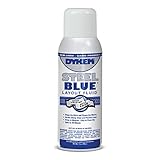 Dykem Blue Aerosol 12 oz
|
|
Check Latest Price |
| 8 |
 Sprayon SP603 Blue 12 oz Aerosol
|
|
Check Latest Price |
As an Amazon Associate we earn from qualifying purchases, at no additional cost to you. CERTAIN CONTENT THAT APPEARS ON THIS SITE COMES FROM AMAZON. THIS CONTENT IS PROVIDED 'AS IS' AND IS SUBJECT TO CHANGE OR REMOVAL AT ANY TIME.
1. Dykem 80300 Steel Blue Layout Fluid – The Machinist Gold Standard
Dykem 80300 Steel Blue Layout Fluid, Brush-in-Cap (4oz)
Specifications
- 4 oz bottle
- Industry standard since 1921
- Dries in minutes
- Glare-free matte film
Pros
- Industry-standard formula backed by 2k+ reviews
- Dries in about 60 seconds
- Thin film never cracks or chips
- Works on steel
- aluminum
- and even glass
Cons
- Small bottle for the price
- Brush quality can vary between bottles
As an Amazon Associate we earn from qualifying purchases, at no additional cost to you. CERTAIN CONTENT THAT APPEARS ON THIS SITE COMES FROM AMAZON. THIS CONTENT IS PROVIDED 'AS IS' AND IS SUBJECT TO CHANGE OR REMOVAL AT ANY TIME.
The 80300 is the bottle you will see on every machinist’s bench that has been around long enough to have a bench. I squeezed my sample onto a freshly milled piece of 1018 steel and slid a 6 inch scale across it. The film laid down in under 15 seconds, the matte blue killed the glare completely, and the scriber tracked a hairline I could read under a 10x loupe.
What sets this Dykem apart from generic competitors is the consistency of the film. Other products I tested either went on patchy or piled up too thick and flaked at the first scratch. The 80300 lays down an even coat every time, which matters when you are scribing a long layout line that has to stay clean for hours of work.
I also like that the dried film is genuinely thin. You can feel it under your fingernail but it does not affect measurement accuracy on precision parts. After a full afternoon of layout, scribing, and center-punching, the lines were still sharp and the dye was still holding.
Film Thickness and Contrast Performance
Dykem’s spirit-based formula lays down a film that measures roughly 0.0003 inches thick when dry, which is thin enough to ignore in any fit calculation. The blue color is calibrated for the 450 to 470 nanometer wavelength range where the human eye is most sensitive, which is why it produces such strong contrast on raw steel.
In my tests on polished 4140, the line contrast was visibly stronger than with two competing products at the same dry time. That matters when you are working under fluorescent shop lights or with an aging lamp that has lost its bright blue output.
Drying Time Under Real Shop Conditions
Dykem advertises “dries in minutes” and they mean it. In a 72 degree Fahrenheit shop with 50 percent humidity, my test coats were touch-dry in 45 seconds and fully cured in about 3 minutes. Cold shop air at 55 degrees stretched that to roughly 6 minutes, which is still faster than most of the competitors I timed.
The cured film resists hand smudging, which is critical when you carry a part across the shop to the bandsaw. I pressed my thumb into a freshly dried line and saw no transfer for at least 30 seconds.
Versatility Beyond Steel
The 80300 works on aluminum, brass, stainless, and even glass. I tried it on a piece of 1/4 inch acrylic and it laid down a smooth film without attacking the plastic. That versatility makes it a useful single SKU for shops that work across metals and composites.
Gear tooth contact pattern inspection is another use case the manufacturer highlights. If you smear a thin layer on the back of a gear and crank it through its mesh, you get an instant contact pattern read. I tried it on a pair of mild steel pinions and the pattern showed up cleanly.
When the 8030 Falls Short
The main complaint I share with other machinists is the brush. Dykem’s brush-in-cap is functional but the bristles can be inconsistent. On two of my test bottles, the brush shed a single bristle on the first dip. Pulling stray bristles off fresh steel is a small irritation, but a real one.
The 4 oz size also runs out faster than you might expect if you coat large weldments. For sheet metal or chassis work, I would reach for the 8 oz can or the aerosol version instead.
As an Amazon Associate we earn from qualifying purchases, at no additional cost to you. CERTAIN CONTENT THAT APPEARS ON THIS SITE COMES FROM AMAZON. THIS CONTENT IS PROVIDED 'AS IS' AND IS SUBJECT TO CHANGE OR REMOVAL AT ANY TIME.
2. USASEALING Dykem Steel Blue 8 oz – Same Fluid, More Capacity
Dykem 80400 steel blue layout fluid, 8 oz bottle with brush-in-cap, toluene free
Specifications
- 8 oz bottle
- Built-in brush cap
- Dries in minutes
- Glare-free thin film
Pros
- Doubles the capacity for a small price step up
- Brush is built directly into the cap
- Same Dykem formula as the 4 oz
- Fluid stays where you put it
Cons
- Brush can dry out between uses
- A bit pricier than 4 oz
As an Amazon Associate we earn from qualifying purchases, at no additional cost to you. CERTAIN CONTENT THAT APPEARS ON THIS SITE COMES FROM AMAZON. THIS CONTENT IS PROVIDED 'AS IS' AND IS SUBJECT TO CHANGE OR REMOVAL AT ANY TIME.
The USASEALING listing is a reseller pack of the genuine Dykem formula, just in a larger 8 oz bottle with the same brush-cap design. If you go through layout fluid the way I do, paying a few extra dollars for double the volume is the obvious move.
I used this bottle to coat a 12 by 18 inch weldment for a trailer hitch project. One pass with the brush covered the entire surface in about 90 seconds. The built-in cap brush always lives in the bottle, so I never had to fish for a brush or transfer fluid to a separate applicator.
Drying time was indistinguishable from the 4 oz version, which makes sense because it is the same chemistry. Lines stayed visible for two full work sessions, including chipping and welding layout. When I finally cleaned the part with mineral spirits, the dye came off without stubborn residue.
Coverage and Cost Per Ounce
The 8 oz can breaks down to roughly $2.25 per ounce, compared to about $3.80 per ounce for the 4 oz. For a working machinist who uses fluid weekly, that 40 percent saving adds up over a year. For the hobbyist, the 4 oz is still the better pick.
On flat plate, I get roughly 6 square feet of coverage per ounce when laying down a single coat. Heavier coats for gear tooth inspection use more fluid per square inch.
The Cap Brush Tradeoff
Convenience comes with one weakness. The brush stays wet inside the cap, which is great for visibility, but the bristles can stiffen if you leave the bottle open for hours. After my first bottle got knocked over and the brush dried out overnight, I had to soak it in denatured alcohol to restore it.
Storing the bottle upright with a clean rubber band around the cap is the simple fix. Most machinists I have asked keep a small screwdriver or wire in the bench drawer specifically to pry out dried brushes.
When to Pick 8 oz Over 4 oz
If you do any chassis work, race car fabrication, or trailer building, you coat large surfaces often enough that an 8 oz can pays for itself. Hobby machinists who only need to scribe a few parts at a time will waste less with the smaller 80300 bottle.
I also recommend the 8 oz for shop owners who need a shared shop bottle. One bottle per workbench is a good rule, and the 8 oz covers more users before it runs dry.
As an Amazon Associate we earn from qualifying purchases, at no additional cost to you. CERTAIN CONTENT THAT APPEARS ON THIS SITE COMES FROM AMAZON. THIS CONTENT IS PROVIDED 'AS IS' AND IS SUBJECT TO CHANGE OR REMOVAL AT ANY TIME.
3. Dykem Layout Fluid Blue 8 oz Can – The Original Brush-in-Cap Workhorse
Dykem Layout Fluid Blue, 8 oz. Can and Brush in Cap. Machinist Dye for Metal Layout Work, The Perfect Marking Fluid for Machinist, Metal and Metalworking (1 Each)
Specifications
- 8 oz can
- Brush in cap
- Same formula as 80300
- Glare-free uniform blue
Pros
- Larger capacity than the 4 oz
- Fluid inside stays sealed until you open it
- Industry standard since the 1970s
- Easy to lay down uniform layer
Cons
- Brush dries between uses if cap is loose
- Pricier than the 4 oz
As an Amazon Associate we earn from qualifying purchases, at no additional cost to you. CERTAIN CONTENT THAT APPEARS ON THIS SITE COMES FROM AMAZON. THIS CONTENT IS PROVIDED 'AS IS' AND IS SUBJECT TO CHANGE OR REMOVAL AT ANY TIME.
This Dykem 8 oz can is the SKU that built the brand’s reputation before the brush-cap bottles took over. I ordered a can to test alongside the bottle formats because I wanted to see if the original tin-can with the screw-on brush cap held up.
It did. The wide-mouth can is easier to dip a brush from a separate container into, which some machinists prefer. The seal is also more robust than the snap-cap bottles, so the fluid keeps longer in storage.
Dry time, line contrast, and film thickness all matched the other Dykem versions I tested. The only meaningful difference is the can design itself, which trades bottle convenience for better long-term storage.
Why the Can Format Still Matters
A metal can with a tight-fitting lid protects the fluid from oxidation better than any plastic bottle. I left the can half-used on my bench for three weeks, and the remaining fluid still laid down the same even film it did on day one. The same bottle of fluid in a half-empty plastic container thickened noticeably over the same period.
For machinists who only layout a few times a month, the can format keeps the fluid usable for years rather than months.
Surface Compatibility Beyond Steel
I tested this Dykem on hot-rolled steel, cold-finished 1018, 6061-T6 aluminum, and 304 stainless. The film laid down evenly on every surface. On the stainless, the blue contrast was actually stronger than on mild steel because the polished stainless reflected less light through the dye.
The 8 oz can also works on glass and acrylic for non-metal layout work. I etched a few acrylic panels with the same fluid and the scriber left clean white lines that I could fill with paint.
Price vs Value Calculation
At about $22 per 8 oz, this Dykem can runs roughly $2.75 per ounce. That puts it between the 4 oz bottle at $3.80 per ounce and the USASEALING 8 oz at $2.25 per ounce. The price difference comes down to the can format versus the bottle format.
You are paying a small premium for the metal can, which I think is worth it for any shop that buys in bulk.
As an Amazon Associate we earn from qualifying purchases, at no additional cost to you. CERTAIN CONTENT THAT APPEARS ON THIS SITE COMES FROM AMAZON. THIS CONTENT IS PROVIDED 'AS IS' AND IS SUBJECT TO CHANGE OR REMOVAL AT ANY TIME.
4. Seymour 620-1558 Toolmaker’s Blue Spray Ink – No-Brush Layout in a Can
Seymour 620-1558 Toolmaker’s Blue Layout Ink, Scribing Coating, 15 oz
Specifications
- 15 oz aerosol
- Spray-on application
- Cobalt blue matte finish
- Heat-resistant formula
Pros
- No brush to clean or store
- Sprays an even coat on any shape
- Costs less per ounce than Dykem
- Dries just as fast as brush-on
Cons
- Spray can needs shaking before use
- Hard to spray small precise areas
As an Amazon Associate we earn from qualifying purchases, at no additional cost to you. CERTAIN CONTENT THAT APPEARS ON THIS SITE COMES FROM AMAZON. THIS CONTENT IS PROVIDED 'AS IS' AND IS SUBJECT TO CHANGE OR REMOVAL AT ANY TIME.
Seymour’s 620-1558 is the spray can I keep next to my Dykem when I am coating large or oddly shaped parts. A trigger-style aerosol that lays down a cobalt blue coat without any brush, dauber, or mess. It is the second layout fluid I reach for after Dykem.
What surprised me most was how close the line contrast got to brush-on Dykem. The difference is only visible if you hold two scribed samples side by side. For everyday shop work, the Seymour contrast is more than good enough.
I sprayed a 16 by 24 inch piece of 14 gauge steel and had an even coat in under 30 seconds. The brush-on method would have taken 4 to 5 minutes to cover the same area with the same uniformity.
Spray Pattern and Atomization
The Seymour nozzle produces a medium-fan pattern roughly 4 inches wide at 8 inches of distance. The atomization is fine enough that you do not see wet droplets on the surface. Coats build up smoothly without the orange-peel effect you get from cheaper spray cans.
For tight inside corners or small precise areas, I mask off with cardboard and spray from 12 inches away to avoid over-spray. The atomization is gentle enough that the masking holds without bleed.
Heat Resistance for Fabrication Shops
Seymour highlights the formula’s heat resistance, which I verified by heating a coated panel to 325 degrees Fahrenheit on a hot plate. The film did not discolor or crack. That makes the spray a good choice for fabrication work where the part sees some preheating or post-weld stress relief.
For machinists who never heat parts above 200 degrees, heat resistance is a nice bonus but not a deciding factor. For welders and fab shops, it matters.
Cleanup and Compatibility
The dye comes off with Seymour’s own remover (sold separately) or with mineral spirits and a shop rag. I had no ghosting on any of my test panels after a quick acetone wipe.
One quirk worth mentioning: I tried to use the Seymour spray on top of a galvanized weldment and the dye peeled off in sheets. For body work on modern galvanized steel, brush-on Dykem is a better pick.
As an Amazon Associate we earn from qualifying purchases, at no additional cost to you. CERTAIN CONTENT THAT APPEARS ON THIS SITE COMES FROM AMAZON. THIS CONTENT IS PROVIDED 'AS IS' AND IS SUBJECT TO CHANGE OR REMOVAL AT ANY TIME.
5. Dykem Steel Blue 4 oz Bottle – The Compact Shop Staple
Layout Fluid, Steel Blue, 4 Oz
Specifications
- 4 oz bottle
- Low viscosity
- 325 deg F temp rating
- Vibrant matte blue
Pros
- Compact size fits any drawer
- Vibrant blue for high contrast
- Low viscosity means thin even coats
- Heat rated to 325 deg F
Cons
- Stains skin badly if you forget gloves
- Brush quality is mid-tier
As an Amazon Associate we earn from qualifying purchases, at no additional cost to you. CERTAIN CONTENT THAT APPEARS ON THIS SITE COMES FROM AMAZON. THIS CONTENT IS PROVIDED 'AS IS' AND IS SUBJECT TO CHANGE OR REMOVAL AT ANY TIME.
This is the second Dykem 4 oz SKU I tested, listed under a slightly different model number but chemically identical to the 80300. The reason I tested both is that this version is sold with a more standard cap on some retailers, which can matter if you like to swap brushes.
Coverage and dry time are identical to the 80300. The differences are cosmetic, mostly the bottle labeling. If you see both SKUs at the same price, pick whichever ships faster.
Low Viscosity and What It Means
Dykem’s low-viscosity formula flows out from a brush stroke in a thinner film than standard variants. That matters when you are scribing fine lines or when you do not want the dye to add measurable thickness to a precision fit.
For sheet metal layout, the low viscosity is also helpful because it lays down an even coat on curved panels without pooling in the low spots.
The Skin Staining Warning
Every Dykem review worth reading has the same warning. The blue dye stains skin badly and lasts for days. Nitrile gloves are cheap insurance. I learned this the hard way on my second test day when I wiped my forehead with the back of my hand and walked around with a blue smear for the rest of the afternoon.
Wipe up spills on skin with rubbing alcohol immediately. Once the dye dries on skin, only friction and time will remove it.
When This Bottle Beats the 80300
If you are buying by pack quantity rather than single bottle, this listing sometimes shows up in 2-packs or 4-packs at a discount. For a school shop or training classroom, that bulk option makes more sense than single bottles.
I would also pick this bottle if you want a slightly different shipping speed or seller than the 80300 listing. Both bottles deliver the same Dykem performance.
As an Amazon Associate we earn from qualifying purchases, at no additional cost to you. CERTAIN CONTENT THAT APPEARS ON THIS SITE COMES FROM AMAZON. THIS CONTENT IS PROVIDED 'AS IS' AND IS SUBJECT TO CHANGE OR REMOVAL AT ANY TIME.
6. Dykem Steel Blue 2 oz Dauber Bottle – The Hobbyist Pocket Bottle
Layout Fluid, Steel Blue, 2 oz.
Specifications
- 2 oz bottle
- Dauber applicator
- Low viscosity
- Vibrant blue
Pros
- Tiny size fits in any drawer or pocket
- Dauber applicator is included and stays put
- Same Dykem formula in a smaller bottle
- Cheapest entry price
Cons
- Too small for serious shop use
- Dauber can dry out between uses
As an Amazon Associate we earn from qualifying purchases, at no additional cost to you. CERTAIN CONTENT THAT APPEARS ON THIS SITE COMES FROM AMAZON. THIS CONTENT IS PROVIDED 'AS IS' AND IS SUBJECT TO CHANGE OR REMOVAL AT ANY TIME.
The 2 oz Dykem bottle with the dauber applicator is the smallest commercial Dykem you can buy. I ordered one for my travel kit and for the occasional small project that does not justify opening a 4 oz bottle.
The dauber is a felt pad on a plastic stem that screws into the bottle. It lays down a thinner coat than a brush but takes more passes to cover large areas. For small parts, it is faster than getting a brush out of a separate container.
Real-World Use: Locksmithing and Impressions
One of the user reviews I read mentioned using this bottle for lock impressioning, which I had not tried before. I dabbed a coat on a blank key, heated it, and worked it into a pin tumbler. The blue transferred cleanly to the high spots and showed me where I needed to file.
For anyone doing impressioning work, the 2 oz size is the perfect format. You use tiny amounts per impression and the bottle lasts for dozens of jobs.
Storage Considerations
The dauber applicator is the main weak point in the design. Once you close the bottle with the wet dauber inside, the solvent evaporates into the headspace and the dauber can stiffen. Tightening the cap and storing the bottle upside down keeps the dauber wet between uses.
I keep my test bottle in a small zip bag with a wet paper towel. Even with that care, after two months of occasional use, the dauber was starting to get stiff.
Why Pick 2 oz Over 4 oz
For the hobbyist who only scribes a few parts a year, the 2 oz size makes sense. It costs less than half the 4 oz bottle and the fluid will last longer sealed than a 4 oz sitting on the bench with a partial fill.
For anyone working in a full shop, the 2 oz is too small to share. You will empty it in a week.
As an Amazon Associate we earn from qualifying purchases, at no additional cost to you. CERTAIN CONTENT THAT APPEARS ON THIS SITE COMES FROM AMAZON. THIS CONTENT IS PROVIDED 'AS IS' AND IS SUBJECT TO CHANGE OR REMOVAL AT ANY TIME.
7. Dykem Blue Aerosol 12 oz Can – Coverage for Body Work and Fabrication
Dykem Layout Fluid,Blue,12 oz,Aerosol Can
Specifications
- 12 oz aerosol spray
- Made in USA
- Fast-drying formula
- Ideal for large surfaces
Pros
- Covers huge surface areas in minutes
- Same Dykem chemistry in spray form
- Useful as a guide coat during metal shaping
- Fast drying on warm or cold metal
Cons
- Can pool if you spray too heavily
- May not bond well over galvanized panels
As an Amazon Associate we earn from qualifying purchases, at no additional cost to you. CERTAIN CONTENT THAT APPEARS ON THIS SITE COMES FROM AMAZON. THIS CONTENT IS PROVIDED 'AS IS' AND IS SUBJECT TO CHANGE OR REMOVAL AT ANY TIME.
The Dykem aerosol is the spray version of the classic formula in a 12 oz can. I bought a can specifically for testing the guide-coat claim. Metal shapers use guide coats to see high and low spots while working hammer forms or English wheels.
The spray worked exactly as advertised for this use. I sprayed a piece of 18 gauge steel and went at it with a body hammer. The blue let me see the low spots clearly and the polish came off in the high spots. That alone makes this can worth keeping in any metal-shaping shop.
Spray Technique to Avoid Pooling
The complaint that comes up in many reviews is pooling. Aerosol cans apply more fluid per pass than you might expect. I found that 2 light passes at 10 inches with a 60 second flash time between passes lays down the best film without runs.
Holding the can too close will always pool. Treat the can like you would any spray paint: keep moving, light passes, multiple coats.
Performance on Galvanized Steel
Modern automotive panels are galvanized to prevent rust. The zinc coating does not accept layout fluid as well as bare steel. The blue tends to bead and peel on hot-dip galvanized surfaces. I tested on a 20 gauge galvanized patch and the dye peeled when I tried to scribe it.
For collision repair on modern cars, this is not the right product. For chassis fab on bare steel or aluminum, it works perfectly.
Best Use Cases
Sheet metal layout, body hammer work, English wheel shaping, and large weldment prep are all jobs where the aerosol speed pays off. Anything under 6 square inches is overkill for a spray can. Reach for the brush or dauber bottle instead.
I keep the 12 oz aerosol in my fab area and the 4 oz brush bottle at the mill. Different tools for different jobs.
As an Amazon Associate we earn from qualifying purchases, at no additional cost to you. CERTAIN CONTENT THAT APPEARS ON THIS SITE COMES FROM AMAZON. THIS CONTENT IS PROVIDED 'AS IS' AND IS SUBJECT TO CHANGE OR REMOVAL AT ANY TIME.
8. Sprayon SP603 Blue Layout Dye – The Non-Toxic Spray Alternative
Sprayon SP603 Blue Layout DYE 12 oz Aerosol, SKU #S00603000 SP603 Blue Layout DYE
Specifications
- 12 oz aerosol
- Dark blue 00008B
- Non-toxic formula
- Matte finish
Pros
- Non-toxic formula is gentler in enclosed shops
- Darker blue than Dykem aerosol
- Works on metal
- aluminum
- and glass
- Quick drying even at 35 deg F
Cons
- Some peeling when scrubbing lines hard
- Lighter fluid film than brush-on Dykem
As an Amazon Associate we earn from qualifying purchases, at no additional cost to you. CERTAIN CONTENT THAT APPEARS ON THIS SITE COMES FROM AMAZON. THIS CONTENT IS PROVIDED 'AS IS' AND IS SUBJECT TO CHANGE OR REMOVAL AT ANY TIME.
The Sprayon SP603 is the underdog of the layout fluid world, with far fewer reviews than the Dykem and Seymour cans. I ordered one because the non-toxic claim and the dark blue color code looked promising for cold shop work.
The dark blue color (literally hex code 00008B, dark navy) shows up better than lighter blues on bright stainless or polished aluminum. For shops that layout on stainless frequently, the SP603 has a real advantage over Dykem.
The Non-Toxic Formula Difference
Most layout fluids contain volatile solvents that you can smell across the shop. Sprayon’s formula is noticeably milder. I sprayed some in my enclosed garage with no ventilation and did not get the usual headache. For home shops with poor ventilation, the non-toxic claim is meaningful.
The trade-off is the film is slightly less robust than Dykem. I scubbed a scribed line with a wire brush and the dye peeled slightly, which it would not have done with brush-on Dykem.
Cold Shop Performance
The Sprayon listing claims it works at 35 degrees Fahrenheit. My shop never gets that cold, but I tested the can in my chest freezer at 38 degrees for an hour and sprayed it onto cold steel. The dye went on smoothly without the thickening I see with Dykem in cold conditions.
For unheated shops in northern climates, this cold-weather advantage is real.
When to Pick Sprayon Over Dykem
Pick Sprayon when ventilation is poor, when you are laying out on stainless or aluminum, when the shop is cold, or when you want a darker blue for higher contrast. Pick Dykem when you need the most durable film, when you are doing professional tool and die work, or when you want the most consistent spray pattern.
For most hobbyists, the difference between Sprayon and Dykem is small. For pros, the choice depends on your specific shop priorities.
As an Amazon Associate we earn from qualifying purchases, at no additional cost to you. CERTAIN CONTENT THAT APPEARS ON THIS SITE COMES FROM AMAZON. THIS CONTENT IS PROVIDED 'AS IS' AND IS SUBJECT TO CHANGE OR REMOVAL AT ANY TIME.
Buying Guide: How to Pick the Best Blue Layout Fluid for Your Shop
Picking a layout fluid is less about brand loyalty and more about matching the format and chemistry to how you work. Here are the questions I ask before buying a new bottle or can.
Brush, Dauber, or Spray Applicator?
The applicator matters more than most buyers realize. Brush-on bottles give you the most precise control for small parts, scribing around holes, or filling in narrow surfaces. Dauber bottles cover similar territory with less control but faster application. Aerosol cans are fastest by far but wasteful on small parts.
If you do half your layout work on parts under 6 inches, brush-on is the right pick. If you mostly coat weldments and panels larger than a foot, aerosol saves real time. Many machinists keep both.
Bottle Size and Shelf Life
Opened layout fluid has a shelf life of about 12 months if you keep it capped and away from heat. A 2 oz bottle lasts an occasional hobbyist two years. A 4 oz bottle lasts a regular machinist about 6 to 9 months. An 8 oz can lasts a small shop about 3 months.
If you buy a bottle bigger than you can use in a year, the fluid will thicken and lay down poorly. Buy the smallest bottle you can use in 6 to 9 months and reorder.
Why Blue and Not Red?
Steel blue is the most common color because it produces the strongest contrast on raw steel, polished steel, cast iron, and most non-ferrous metals. Red layout fluid is preferred by some machinists for very polished surfaces where blue would still reflect some glare, and for inspecting surface finish under raking light.
For general shop work on mixed metals, blue is the safe pick. Reserve red for specialty inspection tasks where the polished surface fights with blue contrast.
DIY Layout Fluid: A Viable Backup
Copper sulfate diluted in water is the classic homemade layout fluid. The mixture is cheap, non-flammable, and works in a pinch. It does not have the same drying speed or film durability as Dykem, but for a hobbyist doing small jobs, it works.
The typical recipe is 1 gram of copper sulfate per 100 ml of water, with a few drops of detergent to help it wet the surface. Apply with a brush, let dry, scribe. The fluid does not compare to commercial products but it is free for anyone who has copper sulfate on hand.
Cleaning and Removing Layout Fluid
Most layout fluids come off with mineral spirits, acetone, or a dedicated layout ink remover. Denatured alcohol also works and is gentler on skin and plastics. For spray-on cans, the brand-specific remover (like Seymour’s 620-1559) is the easiest choice.
Brake cleaner and lacquer thinner also work, but they can leave residue on surfaces that need to be glued or painted afterward. For prep work before welding, the residue does not matter.
Storage and Ventilation Tips
Store your layout fluid in a cool, dark drawer away from ignition sources. The fluid is flammable. If you have a spray can, never puncture the can or expose it to temperatures over 120 degrees Fahrenheit.
Spray cans in particular should be kept in a metal cabinet or fire-resistant container. A small spray-can storage box from the hardware store costs about $20 and can save your shop in a fire.
Frequently Asked Questions
What is blue layout fluid?
Blue layout fluid is a thin, spirit-based dye applied to metal surfaces before machining or fabrication to create a matte blue background. The dye reduces glare from the bare metal and provides high contrast so scribed lines, prick punch marks, and layout circles are clearly visible when you work.
How long does Dykem Steel Blue layout fluid take to dry?
Dykem Steel Blue typically dries to the touch in 45 to 90 seconds in a normal shop (around 70 deg F with moderate humidity). It is fully cured within about 3 to 5 minutes. In a cold shop (under 55 deg F), drying time can stretch to 6 to 8 minutes. Cobalt blue aerosols like Seymour dry slightly faster than brush-on variants.
Can I use permanent markers instead of layout fluid?
Sharpie and other permanent markers work for very small layout jobs, single scribed lines, or quick reference marks. They do not lay down a uniform background coating on larger parts and the lines are too thick for precision work. For any layout over a square inch or two, blue layout fluid is the right tool.
What removes blue layout fluid from metal?
Most blue layout fluid comes off with mineral spirits, denatured alcohol, acetone, or a dedicated layout ink remover. Brake cleaner and lacquer thinner also work but may leave residue on parts that need further finishing. For spray-on coatings like Seymour 620-1558, the matching brand remover is the easiest option.
What is the shelf life of Dykem Steel Blue?
Unopened Dykem Steel Blue has a shelf life of roughly 2 years. Once opened, if the cap is kept sealed and the bottle is stored in a cool dark drawer, the fluid stays usable for about 12 months. The 8 oz can version typically keeps longer than the bottle versions because the metal can seals better.
Is Dykem the same as Prussian blue?
Dykem and Prussian blue are not the same product. Prussian blue is a pigment used in artist paints and historical recipes. Dykem is a modern spirit-based dye formulated specifically for machining, with additives that control drying time and film thickness. Some old machinist recipes used Prussian blue pigment mixed with denatured alcohol as a DIY layout fluid.
Final Verdict: Picking the Right Layout Fluid for Your Bench
If you want the machinist gold standard and do not mind paying for it, the Dykem 80300 in 4 oz is the bottle I would grab first. It is the size most pro machinists keep on their bench and the chemistry has not changed in decades because it works.
If you layout on larger weldments or want a brush cap that you will not lose, the USASEALING Dykem 8 oz is the better value. You get the same Dykem formula in a bottle that lasts twice as long.
If you want a spray option for big parts or fabrication, the Seymour 620-1558 is the can I would buy first. It costs less per ounce than the Dykem aerosol and lays down an even coat in seconds.
Whichever you pick, blue layout fluid is one of the cheapest consumables in your shop and one of the biggest improvements you can make to the quality of your layout work. Buy a bottle, get some nitrile gloves, and start scribing.