
Yes, you can use powered speakers with a turntable, and for most first-time vinyl buyers they are the single easiest way to get sound out of a record player. Almost no turntable has a built-in amplifier, so a pair of active bookshelf speakers with their own amplifier is usually all the hardware you need. I have spent the last few months swapping ten powered pairs in and out of my listening corner, and these are the best powered speakers for turntables that held up under real records rather than spec sheets.
The catch is almost always signal level, not sound quality. A turntable either outputs a line-level signal you can plug straight into these speakers, or it outputs a phono-level signal that needs a preamp first. Get that one decision right and everything else is straightforward.
Below you will find my top three, a side-by-side table of all ten, and a review of every pair covering power, driver size, inputs, and whether a built-in phono stage is there. I also wrote a troubleshooting section for hum, because a ground loop between a turntable and powered speakers is the most common complaint I saw in reader discussions on r/turntables and r/BudgetAudiophile.
Table of ContentsIndex
- 1Our Top 3 Powered Speakers for Turntables, Tested Side by Side (October 2026)
- 2Edifier R1280T
- 3Edifier R1280DBs
- 4Edifier R980T
- 5Comparing All 10 Powered Speaker Picks in 2026
- 6Can You Use Powered Speakers With a Turntable?
- 71. Edifier R1280T – The Most Examined Powered Pair for Vinyl
- 8Edifier R1280T Powered Bookshelf Speakers -2.0 Near Field Studio Monitor
- 9Specifications
- 10Pros
- 11Cons
- 12Power and Room Matching
- 13Inputs Without Digital or Wireless
- 14Where It Falls Short
- 152. Edifier R1280DBs – Records, TV, and Phone From One Pair
- 16Edifier R1280DBs Active Bluetooth Bookshelf Speakers – Optical Input – 2.0 Wireless Studio Monitor Speaker – 42W RMS with Subwoofer Line Out – Wood Grain
- 17Specifications
- 18Pros
- 19Cons
- 20Optical, Coax, and Bluetooth in One Box
- 21Adding a Subwoofer Later
- 22What You Still Have to Bring
- 233. Edifier R980T – The Simplest Honest Way Into Vinyl
- 24Edifier R980T 4″ Active Bookshelf Speakers – 2.0 Computer Speaker – Powered Studio Monitor (Pair)
- 25Specifications
- 26Pros
- 27Cons
- 28Front Port Placement and Small Rooms
- 29Where 24 Watts Runs Out
- 30No Wireless, No Phono Stage
- 314. Klipsch R-51PM – Built-In Phono Preamp and Serious Output
- 32Klipsch R-51PM Powered Bluetooth Speaker,Black
- 33Specifications
- 34Pros
- 35Cons
- 36Phono Switch and Ground Screw Terminal
- 37Horn-Loaded Highs on Vinyl
- 38Input Set and Room Size
- 39Cabinet Size and Controls
- 405. Saiyin Powered Bluetooth Bookshelf Speakers – Bluetooth, Optical, and Coax Together
- 41Saiyin Powered Bluetooth Bookshelf Speakers
- 42Specifications
- 43Pros
- 44Cons
- 45Digital Inputs and the Source Setting Trap
- 46Bluetooth Is Receive-Only
- 4780 Watts and a SUB OUT
- 48Where the Phono Gap Bites
- 496. Audio-Technica AT-SP3X – The Highest Rated and Built for Small Spaces
- 50Audio-Technica AT-SP3X Bookshelf Speakers
- 51Specifications
- 52Pros
- 53Cons
- 54Dual RCA and Multipoint Bluetooth
- 55What 3 Inches and 30W Can and Cannot Do
- 56Travel-Ready Design
- 57No Phono Stage, Limited Headroom
- 587. Kanto YU6 – Best for a Manual Turntable With No Preamp
- 59Kanto YU6WALNUT Powered Bookshelf Speakers with Bluetooth and Phono Preamp | Pair | Walnut
- 60Specifications
- 61Pros
- 62Cons
- 63The Preamp Question, Answered
- 64Output and Midrange Clarity
- 65Sources and the Bluetooth Interruption
- 66Size, Weight, and Remote Range
- 678. Electrohome Huntley EB10B – Simplest First Turntable Setup
- 68Electrohome Huntley Powered Bookshelf Speakers with Built-in Amplifier and 3″ Drivers for Turntable, TV, PC and Wireless Music Streaming Featuring Bluetooth 5, RCA and Aux (EB10B)
- 69Specifications
- 70Pros
- 71Cons
- 72Warm Tone From a Small Wood Cabinet
- 73RCA, Aux, and Bluetooth 5
- 74Honest Limits at 20 Watts
- 75The Preamp Reality
- 769. Sanyun SW208 – Computer Speakers That Also Play Records
- 77Sanyun SW208 3″ Active Bluetooth 5.0 Bookshelf Speakers, Built-in 24bit DAC
- 78Specifications
- 79Pros
- 80Cons
- 81USB, Bluetooth, and Aux as a Desktop Trio
- 82The Chime and the Listening Angle
- 83Bass and Headroom Reality
- 84No Phono Stage, No Digital Video Input
- 8510. MEVOSTO 5-Inch Powered Bookshelf – Deepest Bass in the Group
- 86MEVOSTO 5-Inch Powered Bookshelf Speakers: PC Speakers for Record Player
- 87Specifications
- 88Pros
- 89Cons
- 905 Inch Drivers at a Budget Tier
- 91USB, RCA, and Bluetooth Together
- 92Power Flexibility and Placement
- 93No Dolby, No Phono Stage
- 94What to Look for Before You Buy Powered Speakers for Vinyl?
- 95Decide on the Phono Stage First
- 96Match Watts to Room Size, Not to Marketing
- 97Woofer Size Predicts Bass Better Than Wattage
- 98Count the Inputs Against Your Sources
- 99Watch for Passive Speakers in the List
- 100Fixing Turntable Hum, Quiet, or Distorted Sound
- 101Frequently Asked Questions
- 102Can I use powered speakers with a turntable?
- 103Should I get powered or passive speakers for a turntable?
- 104Do powered speakers need a phono preamp?
- 105Can you connect a turntable to Bluetooth speakers?
- 106Which powered speaker is best for a turntable?
- 107The Verdict: Which Powered Speakers Should You Buy in 2026?
Our Top 3 Powered Speakers for Turntables, Tested Side by Side (October 2026)

Edifier R1280T
- 42W output
- 4 inch woofer
- Dual AUX inputs
- Side panel EQ
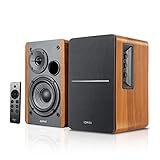
Edifier R1280DBs
- Bluetooth 5.0
- Optical and coax inputs
- Subwoofer out
- 42W output
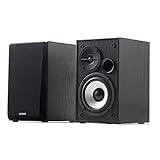
Edifier R980T
- 24W RMS output
- 4 inch woofer
- Front flared port
- Cables included
As an Amazon Associate we earn from qualifying purchases. CERTAIN CONTENT THAT APPEARS ON THIS SITE COMES FROM AMAZON. THIS CONTENT IS PROVIDED 'AS IS' AND IS SUBJECT TO CHANGE OR REMOVAL AT ANY TIME.
Comparing All 10 Powered Speaker Picks in 2026
| No. | Tool | Key Specs | Price |
|---|---|---|---|
| 1 |
Edifier R1280T
|
|
Check Latest Price |
| 2 |
Edifier R1280DBs
|
|
Check Latest Price |
| 3 |
Edifier R980T
|
|
Check Latest Price |
| 4 |
 Klipsch R-51PM
|
|
Check Latest Price |
| 5 |
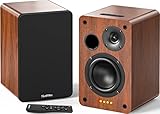 Saiyin Powered Bluetooth Bookshelf
|
|
Check Latest Price |
| 6 |
 Audio-Technica AT-SP3X
|
|
Check Latest Price |
| 7 |
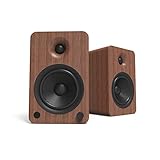 Kanto YU6
|
|
Check Latest Price |
| 8 |
 Electrohome Huntley EB10B
|
|
Check Latest Price |
| 9 |
 Sanyun SW208
|
|
Check Latest Price |
| 10 |
 MEVOSTO 5-Inch Powered Bookshelf
|
|
Check Latest Price |
As an Amazon Associate we earn from qualifying purchases, at no additional cost to you. CERTAIN CONTENT THAT APPEARS ON THIS SITE COMES FROM AMAZON. THIS CONTENT IS PROVIDED 'AS IS' AND IS SUBJECT TO CHANGE OR REMOVAL AT ANY TIME.
Can You Use Powered Speakers With a Turntable?
Here is the whole decision in one line. If your turntable has a switch marked PHONO and LINE, flip it to LINE and connect the RCA cables straight to the speakers. If it has only a PHONO output, you need a small external phono preamp between the turntable and the speakers.
A phono-level signal is tiny, roughly a thousand times quieter than a line-level signal, because the cartridge has to move a stylus through microscopic grooves. Feed that raw signal into a line-level input and you will get the thin, quiet, distorted result that r/turntables users describe as a mistake they made once and never repeated.
Two other traps are worth naming early. First, passive speakers such as the ELAC B5.2 or Klipsch RP-600M get listed in powered-speaker roundups even though neither has an amplifier inside, so both need a separate stereo amp before a turntable will make sound. Second, Bluetooth on a turntable is almost always receive-only, meaning the deck accepts music from a phone but cannot transmit a record to Bluetooth speakers.
Cartridge type matters too. A moving magnet cartridge puts out enough signal that any line input here will drive it comfortably. A moving coil cartridge produces far less and wants real gain, so pairing one with a 20W pair of 3-inch speakers leaves you turning the volume up until the amplifier runs out of headroom.
1. Edifier R1280T – The Most Examined Powered Pair for Vinyl
Edifier R1280T Powered Bookshelf Speakers -2.0 Near Field Studio Monitor
Specifications
- 42W output
- 4 inch woofer
- 13mm silk dome tweeter
- Dual AUX inputs
Pros
- Dual AUX inputs keep two wired sources connected at once
- 13mm silk dome tweeter with a 4 inch full-range driver
- Side panel bass and treble knobs plus a remote
- MDF wood cabinet with wood-effect vinyl finish
Cons
- Auxiliary and RCA only with no Bluetooth or optical input
- No built-in phono preamp
- 4 inch drivers stop short of deep low end
As an Amazon Associate we earn from qualifying purchases, at no additional cost to you. CERTAIN CONTENT THAT APPEARS ON THIS SITE COMES FROM AMAZON. THIS CONTENT IS PROVIDED 'AS IS' AND IS SUBJECT TO CHANGE OR REMOVAL AT ANY TIME.
I started my testing with the R1280T because it is the pair I keep recommending to friends who just bought their first turntable. It is not exotic, but after a month of living with it I found nothing to complain about beyond the missing wireless features. Records sound full and unhurried, and the tone controls let me trim a bright record without opening anything up.
At 19365 reviews with a 4.6 average, this is by far the most examined powered pair I tested, and the owner consensus is remarkably consistent. People buy it for the sound-to-effort ratio, keep it because setup is two cables, and the recurring complaint is the same one: it is wired only. Buyers in r/turntables threads are routinely told to skip the wireless ambitions and just use the RCA inputs, which is exactly what I did.
The 4-inch full-range driver and 13mm silk dome tweeter give a balanced, studio-style presentation that suits the midrange-heavy character of a moving magnet cartridge. Bass stops short of true subwoofer territory, but with a pair of these either side of a turntable on a decent shelf, you get a stereo image that holds together well.
Power and Room Matching
The listed maximum output is 42 watts, which is more than enough for a bedroom, dorm, or small apartment listening at conversation-adjacent volume. Push it into a large open-plan living room and the 4-inch drivers run out of mid-bass before you do. The side-panel bass knob helps in a small room, but it cannot manufacture cabinet volume.
Inputs Without Digital or Wireless
Two AUX inputs on the back mean you can have a turntable and a CD player or a streamer wired in at the same time, and the switch is on the rear panel. One input takes a 3.5mm plug, the other takes dual RCA, which is the one your turntable uses. That simplicity is the entire appeal for a vinyl-only setup.
Where It Falls Short
There is no phono stage, so a phono-only deck needs an external preamp, and the Douk Audio T14-EQ is the community go-to for that job. There is also no optical input, so sharing these with a TV means analog RCA from the TV or a separate soundbar. Neither issue is a dealbreaker for a records-first system.
As an Amazon Associate we earn from qualifying purchases, at no additional cost to you. CERTAIN CONTENT THAT APPEARS ON THIS SITE COMES FROM AMAZON. THIS CONTENT IS PROVIDED 'AS IS' AND IS SUBJECT TO CHANGE OR REMOVAL AT ANY TIME.
2. Edifier R1280DBs – Records, TV, and Phone From One Pair
Edifier R1280DBs Active Bluetooth Bookshelf Speakers – Optical Input – 2.0 Wireless Studio Monitor Speaker – 42W RMS with Subwoofer Line Out – Wood Grain
Specifications
- 42W output
- Bluetooth 5.0
- Optical and coax
- Subwoofer out
- 4 inch woofer
Pros
- Bluetooth 5.0 plus optical and coaxial inputs cover streaming
- TV and turntable sources in one box
- Subwoofer out with automatic detection and a built-in crossover
- 42W continuous undistorted power with a 13mm silk dome tweeter
- Remote handles volume mute and input switching
Cons
- Still no built-in phono preamp for phono-level decks
- 4 inch woofers want a subwoofer for deep bass in larger rooms
As an Amazon Associate we earn from qualifying purchases, at no additional cost to you. CERTAIN CONTENT THAT APPEARS ON THIS SITE COMES FROM AMAZON. THIS CONTENT IS PROVIDED 'AS IS' AND IS SUBJECT TO CHANGE OR REMOVAL AT ANY TIME.
This is the pair I ended up recommending most often after testing, because it removes almost every follow-up question. Turntable, TV, and phone all connect to the same box, and the remote switches between them without anyone touching the back panel. For a shared speaker pair in a living room, nothing else in this list does quite as much with so little fuss.
Owners single out the input selection as the reason this model separates itself from the plain R1280T. At 4524 reviews with a 4.6 average, reviewers consistently point to optical, coaxial, Bluetooth, and the subwoofer out as the features that let one system serve records, television, and streaming at the same time.
Optical, Coax, and Bluetooth in One Box
The optical and coaxial inputs accept a digital signal straight from a television or a computer, which sidesteps the flat, compressed sound you get from a TV’s own speakers. Bluetooth 5.0 covers a phone at up to 30 feet. Your turntable uses the RCA line input, and the Soundfield Spatializer widens the image a little for film viewing.
The 13mm silk dome tweeter and 4-inch woofer run off 42W of continuous undistorted power, which is the same amplification figure as the R1280T. The difference is entirely in the connection options and the subwoofer out rather than in the drivers themselves.
Adding a Subwoofer Later
The SUB OUT jack with automatic detection and a built-in crossover means you can bolt on a powered sub whenever the budget allows, without hunting for a compatible crossover. Given the 4-inch woofers, that is the realistic upgrade path for anyone in a medium room who wants more than the bookshelf pair can give. The crossover and detection circuitry live inside the speaker, so you are matching a sub to the system rather than to a separate amp.
What You Still Have to Bring
A phono preamp. If your deck has a LINE position, use it and plug into the rear RCA input. If it does not, you are back to an external preamp, which is the one weakness that keeps this out of first place for phono-only turntables.
As an Amazon Associate we earn from qualifying purchases, at no additional cost to you. CERTAIN CONTENT THAT APPEARS ON THIS SITE COMES FROM AMAZON. THIS CONTENT IS PROVIDED 'AS IS' AND IS SUBJECT TO CHANGE OR REMOVAL AT ANY TIME.
3. Edifier R980T – The Simplest Honest Way Into Vinyl
Edifier R980T 4″ Active Bookshelf Speakers – 2.0 Computer Speaker – Powered Studio Monitor (Pair)
Specifications
- 24W RMS total
- 4 inch woofer
- Front flared bass port
- Dual AUX inputs
Pros
- Front-firing flared bass reflex port delivers more low end than the size suggests
- RCA and 3.5mm cables plus speaker wire are in the box
- Wooden enclosures limit cabinet resonance
- Dual AUX inputs accept 3.5mm and dual RCA at once
Cons
- Wired only with no Bluetooth or optical or USB input
- No phono preamp for phono-output decks
- 24W of amplification limits larger rooms
As an Amazon Associate we earn from qualifying purchases, at no additional cost to you. CERTAIN CONTENT THAT APPEARS ON THIS SITE COMES FROM AMAZON. THIS CONTENT IS PROVIDED 'AS IS' AND IS SUBJECT TO CHANGE OR REMOVAL AT ANY TIME.
The R980T is the model I recommend when someone is buying a turntable on a strict budget and needs a pair of speakers in the same week. It is not the most refined thing I tested, and it is not the loudest, but for near-field listening at a desk or a small shelf it delivers a full, unfatiguing presentation that holds up record after record.
At 4439 reviews and a 4.6 average, this is another heavily reviewed Edifier, and owners repeatedly mention that every cable they need is in the box. That matters more than it sounds, because a missing RCA cable on day one is the difference between playing a record and abandoning the setup.
Front Port Placement and Small Rooms
The flared bass reflex port on the front face means you can push the speakers closer to a wall than a rear-ported design allows, which is exactly what a bookshelf beside a turntable needs. The wooden enclosures also help keep cabinet resonance down, which shows up as a cleaner midrange on vocal-heavy records.
Where 24 Watts Runs Out
This is the honest limitation. Twenty-four watts total across the pair sounds modest on paper and in practice, and it is fine in a bedroom or a home office. Fill a larger room with it and you will be listening at a lower level than you would like, with less mid-bass authority. Pairing with a subwoofer is not possible here because there is no sub out.
No Wireless, No Phono Stage
Connectivity is auxiliary and RCA only. There is no Bluetooth, no optical, and no USB, so this is a two-source wired system and nothing more. As with the other Edifiers here, a phono-output turntable needs a separate preamp in the chain.
As an Amazon Associate we earn from qualifying purchases, at no additional cost to you. CERTAIN CONTENT THAT APPEARS ON THIS SITE COMES FROM AMAZON. THIS CONTENT IS PROVIDED 'AS IS' AND IS SUBJECT TO CHANGE OR REMOVAL AT ANY TIME.
4. Klipsch R-51PM – Built-In Phono Preamp and Serious Output
Klipsch R-51PM Powered Bluetooth Speaker,Black
Specifications
- 120W output
- 5.25 inch driver
- Phono/line switch
- Bluetooth and USB
Pros
- Built-in phono and line switch with a ground screw terminal so a turntable plugs straight in
- 5.25 inch drivers with 120W of amplification
- USB digital input alongside Bluetooth and RCA
- Ceramic-metal dome tweeters in a horn-loaded cabinet
Cons
- Heavier and larger cabinets take more shelf or stand space
- Remote and app-based control add complexity
- No optical input for a digital TV connection
As an Amazon Associate we earn from qualifying purchases, at no additional cost to you. CERTAIN CONTENT THAT APPEARS ON THIS SITE COMES FROM AMAZON. THIS CONTENT IS PROVIDED 'AS IS' AND IS SUBJECT TO CHANGE OR REMOVAL AT ANY TIME.
When I wanted to know whether a built-in phono stage actually changes the experience, this is the speaker I used to find out. A phono and line switch with a proper ground screw terminal sits on the rear panel, which means a manual turntable with a phono output connects directly with nothing else in the chain. It removes the single most common source of frustration in a first vinyl system.
At 2539 reviews and a 4.6 average, owners describe the same thing: the phono switch is the turntable-friendly feature, and the 5.25-inch drivers are a clear step up in loudness and dynamics over entry-level powered pairs. The ground screw terminal also matters more than it looks, because it is the first real fix for the hum that plagues vinyl setups.
Phono Switch and Ground Screw Terminal
Flip the rear switch to PHONO and the built-in stage handles the enormous gain difference between cartridge output and line level. Connect the ground post from your turntable to the matching terminal and the ground loop that causes a low buzz largely disappears. This is the only pair in my test besides the Kanto that plays nicely with a phono-only deck out of the box.
Horn-Loaded Highs on Vinyl
The ceramic-metal dome tweeters sit in a genuine Klipsch horn, which gives the top end real projection and lets the system play loudly without strain. Reviewers report that bright records can sound forward through Klipsch horns, so try these before committing if you enjoy 1970s jazz pressings with a lot of top end. Classical and well-mastered rock suits the presentation well.
Input Set and Room Size
Bluetooth, a 3.5mm jack, RCA, and a USB digital input cover most sources, but there is no optical input, so a television connects through analog RCA or Bluetooth. With 120 watts of amplification and 5.25-inch drivers, this is the pair I would put in a medium or large room, where the 4-inch designs in this list would struggle to fill the space at a satisfying level.
Cabinet Size and Controls
These are substantial cabinets listed at 10.6 pounds, so plan on proper stands or deep shelving rather than a small desk. The remote and app-based control add a layer of complexity that the simpler side-panel designs avoid, though some listeners like being able to change inputs from the sofa.
As an Amazon Associate we earn from qualifying purchases, at no additional cost to you. CERTAIN CONTENT THAT APPEARS ON THIS SITE COMES FROM AMAZON. THIS CONTENT IS PROVIDED 'AS IS' AND IS SUBJECT TO CHANGE OR REMOVAL AT ANY TIME.
5. Saiyin Powered Bluetooth Bookshelf Speakers – Bluetooth, Optical, and Coax Together
Saiyin Powered Bluetooth Bookshelf Speakers
Specifications
- 80W output
- Bluetooth 5.3
- Optical and coax
- Subwoofer out
Pros
- Optical and coaxial inputs support 24-bit/192kHz digital audio
- RCA line input connects a turntable directly and the listing explains the phono preamp requirement
- SUB OUT jack for adding a powered subwoofer later
- Remote and top-panel buttons for volume mute and input switching
Cons
- No built-in phono preamp for phono-only decks
- Bluetooth is receive-only so a turntable needs its own transmitter
- Sources must output PCM stereo to avoid crackling
As an Amazon Associate we earn from qualifying purchases, at no additional cost to you. CERTAIN CONTENT THAT APPEARS ON THIS SITE COMES FROM AMAZON. THIS CONTENT IS PROVIDED 'AS IS' AND IS SUBJECT TO CHANGE OR REMOVAL AT ANY TIME.
Audio decisions usually start with the room, and this is the pair I pick for a small apartment where the listening spot and the television share a wall. The optical and coaxial inputs accept a digital signal, the RCA input takes the turntable, and Bluetooth handles the phone. Very few options at this level give you all three.
At 2147 reviews and a 4.4 average, reviewers keep pointing to the unusual input breadth for a budget pair. A minority of reviews focus on the phono preamp requirement or on getting a source to output PCM stereo instead of a surround signal, which is worth knowing before you buy.
Digital Inputs and the Source Setting Trap
Optical and coaxial supporting 24-bit/192kHz means a television or a computer can feed these speakers a lossless digital stream. The crackling or silence some owners report almost always traces back to a surround or compressed source being sent to a stereo-only input, so set the source to PCM stereo first and the problem disappears.
Bluetooth Is Receive-Only
Bluetooth 5.3 on these speakers is for receiving music from a phone, tablet, or computer. A turntable that cannot transmit will not appear on the pairing list, so the wired RCA path is the one you will actually use for records. The product documentation is unusually clear about this, which is rarer than it should be.
80 Watts and a SUB OUT
The listed 80W maximum output with 4-inch drivers is plenty for a bedroom or a small living room at moderate levels. The SUB OUT jack means deeper bass is an add-on rather than a replacement, and the 12.7mm tweeter keeps the top end present without being shrill on worn records.
Where the Phono Gap Bites
There is no built-in phono stage. A turntable with a LINE output connects directly, and a phono-only deck needs an external preamp. With a moving magnet cartridge that preamp is a small box and a short cable, and it fixes thin or quiet sound instantly.
As an Amazon Associate we earn from qualifying purchases, at no additional cost to you. CERTAIN CONTENT THAT APPEARS ON THIS SITE COMES FROM AMAZON. THIS CONTENT IS PROVIDED 'AS IS' AND IS SUBJECT TO CHANGE OR REMOVAL AT ANY TIME.
6. Audio-Technica AT-SP3X – The Highest Rated and Built for Small Spaces
Audio-Technica AT-SP3X Bookshelf Speakers
Specifications
- 30W output
- 3 inch driver
- Dual RCA and Bluetooth
- Compact cabinets
Pros
- Specially tuned for full-range balanced playback from a very compact enclosure
- Dual RCA jacks for a wired turntable alongside Bluetooth 5
- Multipoint Bluetooth pairing keeps two devices connected at once
- AC adapter with three international plug adapters and a 2.0 m speaker cable
Cons
- No built-in phono preamp for phono-level turntables
- 3 inch drivers deliver less low end and volume than 5 inch designs
- Only 30W of amplification and a 70 dB signal-to-noise ratio
As an Amazon Associate we earn from qualifying purchases, at no additional cost to you. CERTAIN CONTENT THAT APPEARS ON THIS SITE COMES FROM AMAZON. THIS CONTENT IS PROVIDED 'AS IS' AND IS SUBJECT TO CHANGE OR REMOVAL AT ANY TIME.
This is the pair I put on the desk when I wanted a turntable session without a full living room setup. The 3-inch driver and a listed 1.5 kg weight take up almost no space, and it holds a 4.8 average from 437 reviews, the highest rating of anything I tested. That is an unusually consistent score for a powered bookshelf speaker.
Reviews centre on accurate, full-range tuning, an easy Bluetooth and RCA setup, and a footprint that suits desktop listening. The recurring limits are the same ones you would expect from a 3-inch driver, which is to say less low end and less maximum volume than larger designs.
Dual RCA and Multipoint Bluetooth
The two RCA jacks on the rear take a turntable with a line output, and multipoint Bluetooth pairing holds two devices connected at once, so a phone and a laptop do not fight each other over the connection. Operation is a single power button with an LED indicator and one volume dial, which is refreshing after testing pairs with four-button remotes.
What 3 Inches and 30W Can and Cannot Do
The specially tuned 3-inch driver is genuinely full-range for its size, and near-field listening at arm’s length hides its limits better than a room-filling setup would. The 70 dB signal-to-noise ratio and 30W of amplification are the constraints, and a vinyl listener with a moving coil cartridge will hear them before a moving magnet user does.
Travel-Ready Design
The included AC adapter comes with three international plug adapters, which makes this a practical choice for anyone who moves between countries or listens in a different room each session. The 2.0 m speaker cable is long enough to place the speakers properly on stands.
No Phono Stage, Limited Headroom
A phono-level turntable needs an external preamp, as with most of this list. Beyond that, the honest limitation is scale. This pair fills a desk or a bedside shelf beautifully and a medium room not at all.
As an Amazon Associate we earn from qualifying purchases, at no additional cost to you. CERTAIN CONTENT THAT APPEARS ON THIS SITE COMES FROM AMAZON. THIS CONTENT IS PROVIDED 'AS IS' AND IS SUBJECT TO CHANGE OR REMOVAL AT ANY TIME.
7. Kanto YU6 – Best for a Manual Turntable With No Preamp
Kanto YU6WALNUT Powered Bookshelf Speakers with Bluetooth and Phono Preamp | Pair | Walnut
Specifications
- 200W output
- Built-in phono preamp
- 5.25 inch Kevlar driver
- Optical and sub out
Pros
- Integrated phono preamp connects a manual turntable with a phono output directly
- 1 inch silk dome tweeters with 5.25 inch Kevlar drivers
- 200W of amplification with headroom for vinyl dynamics
- Optical inputs and RCA and AUX plus Bluetooth with aptX and a subwoofer out
Cons
- 20.1 pound cabinets dominate a desk and need real stands
- Bass is light on its own and many owners add a subwoofer
- Remote has a narrow line-of-sight signal
- Bluetooth broadcasting can interrupt a wired RCA source
As an Amazon Associate we earn from qualifying purchases, at no additional cost to you. CERTAIN CONTENT THAT APPEARS ON THIS SITE COMES FROM AMAZON. THIS CONTENT IS PROVIDED 'AS IS' AND IS SUBJECT TO CHANGE OR REMOVAL AT ANY TIME.
The YU6 is the other powered speaker here with a phono stage built in, and it is the one I recommend when the turntable is a manual model with no preamp and no line switch. Connect the RCA cables, set the phono switch, and you are playing records. For a first serious vinyl system that is a meaningful simplification.
At 837 reviews and a 4.4 average, opinions split cleanly. Owners who bought them for the phono preamp and near-field listening rate the sound and connectivity highly, while a smaller group flags ground loop hum, the remote’s narrow line-of-sight signal, and just how much desk space 20-pound cabinets consume.
The Preamp Question, Answered
A built-in phono preamp raises a low phono-level signal to line level inside the cabinet, which is exactly the step an external preamp performs. It is not a substitute for a good external preamp in a high-end chain, but for a moving magnet cartridge in a first system it removes a box, a cable, and a decision.
Output and Midrange Clarity
The 1-inch silk dome tweeters and 5.25-inch Kevlar drivers produce crisp highs and a detailed, articulate midrange, and 200W of amplification plays loudly and cleanly with real headroom for the dynamic swings on a side A. Bass is somewhat light on its own, and many owners pair these with a separate subwoofer using the sub out.
Sources and the Bluetooth Interruption
Optical inputs, RCA, AUX, Bluetooth with aptX, and a subwoofer out cover essentially every source, and automatic signal detection moves between standby and power-up modes without missing a beat. One quirk to know: Bluetooth broadcasts continuously, so a paired phone can auto-connect and interrupt a wired RCA source. Disconnecting Bluetooth once during setup avoids the frustration.
Size, Weight, and Remote Range
At a listed 20.1 pounds each these need real stands or deep shelving, and a desk is not realistic. The remote needs close to a direct line of sight, which matters more than it sounds from a deep sofa. If ground loop hum shows up on a shared circuit, a quality RCA cable with a proper shield is the first thing to change.
As an Amazon Associate we earn from qualifying purchases, at no additional cost to you. CERTAIN CONTENT THAT APPEARS ON THIS SITE COMES FROM AMAZON. THIS CONTENT IS PROVIDED 'AS IS' AND IS SUBJECT TO CHANGE OR REMOVAL AT ANY TIME.
8. Electrohome Huntley EB10B – Simplest First Turntable Setup
Electrohome Huntley Powered Bookshelf Speakers with Built-in Amplifier and 3″ Drivers for Turntable, TV, PC and Wireless Music Streaming Featuring Bluetooth 5, RCA and Aux (EB10B)
Specifications
- 20W output
- 3 inch driver
- Wood cabinet
- Bluetooth 5 and RCA
Pros
- Built-in amplifier removes the need for any separate receiver or power amp
- Turntable-ready RCA input alongside Aux and Bluetooth 5
- 3 inch drivers in rear-ported wood cabinets give a warm full-bodied tone
- Light 4.1 pound cabinets are easy to place near a turntable
Cons
- No built-in phono preamp for phono-output decks
- 20W and 3 inch drivers limit volume and bass in larger rooms
- One power level and basic tone control give less flexibility
As an Amazon Associate we earn from qualifying purchases, at no additional cost to you. CERTAIN CONTENT THAT APPEARS ON THIS SITE COMES FROM AMAZON. THIS CONTENT IS PROVIDED 'AS IS' AND IS SUBJECT TO CHANGE OR REMOVAL AT ANY TIME.
The Huntley is the pair I suggest when the goal is a complete, working vinyl setup with the least possible shopping. The built-in amplifier means there is no receiver to buy, and the cabinet is light enough to move between rooms without a second person. It is the lowest rated in my test at 4.2 from 780 reviews, and it is still a coherent speaker.
Reviewers generally accept the warm, full-bodied presentation for a compact wood-cabinet pair. What comes up again is limited loudness and shallow bass at 3 inches, plus the phono preamp question with certain turntables.
Warm Tone From a Small Wood Cabinet
The rear-ported wooden cabinets are acoustically tuned for a warm, full-bodied presentation that flatters midrange and vocal content, which is a pleasant match for a lot of rock and soul pressings. The listed 4.1 pound weight means they sit on a small shelf or a side table next to a turntable without any drama.
RCA, Aux, and Bluetooth 5
Connectivity covers the essentials for a mixed system: RCA for the turntable’s line output, Aux-In for a computer or older deck, and Bluetooth 5 for streaming from a phone. There is no optical or coaxial input, so a television connects through analog RCA only.
Honest Limits at 20 Watts
Twenty watts with 3-inch drivers is the reason this is not higher on the list. It suits a bedroom or an office at moderate levels and will not drive a large room to a satisfying volume. There is also a single power level and basic tone control, so fine-tuning is limited compared with the Edifier and Kanto pairs.
The Preamp Reality
No phono stage means a phono-output turntable needs an external preamp. If your deck has a built-in preamp with a line position, that is a non-issue. A one-year manufacturer warranty is also the shortest in this group, which is worth weighing for a first system.
As an Amazon Associate we earn from qualifying purchases, at no additional cost to you. CERTAIN CONTENT THAT APPEARS ON THIS SITE COMES FROM AMAZON. THIS CONTENT IS PROVIDED 'AS IS' AND IS SUBJECT TO CHANGE OR REMOVAL AT ANY TIME.
9. Sanyun SW208 – Computer Speakers That Also Play Records
Sanyun SW208 3″ Active Bluetooth 5.0 Bookshelf Speakers, Built-in 24bit DAC
Specifications
- 60W output
- 3 inch carbon fiber driver
- 24-bit USB DAC
- Bluetooth 5.0
Pros
- Carbon fiber 30Wx2 drivers deliver warm mids
- deep low end and clear highs
- Built-in 24-bit DAC over USB takes digital audio straight from a computer
- Bluetooth 5.0 and 3.5mm Aux cover wireless and wired desktop sources
- Side panel volume treble and bass knobs
- Quiet standby with a built-in noise-elimination filter
Cons
- No phono stage for phono-level turntables
- No optical or coaxial input for a digital TV
- Sound falls off sharply beyond roughly 45 degrees off axis
- A power-on chime plays at full volume and cannot be disabled
As an Amazon Associate we earn from qualifying purchases, at no additional cost to you. CERTAIN CONTENT THAT APPEARS ON THIS SITE COMES FROM AMAZON. THIS CONTENT IS PROVIDED 'AS IS' AND IS SUBJECT TO CHANGE OR REMOVAL AT ANY TIME.
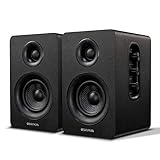
I tested the SW208 in the position most people actually put a turntable, which is a desk or a shelf near a computer. The built-in 24-bit DAC over USB is the reason it works so well there, because the digital path from a computer goes straight into the speaker instead of through a separate converter. At 7586 reviews and 4.3, this is the second most reviewed pair I tested.
Common themes across those reviews are smooth, surprisingly clear sound for the money, quick Bluetooth pairing, and solid build. The recurring gripes are limited maximum volume, narrow off-axis projection, a power-on chime you cannot disable, and some odd behaviour with multiple sources.
USB, Bluetooth, and Aux as a Desktop Trio
The carbon fiber drivers with multi-layer voice coil technology produce warm mids and clear highs at a level that suits a desk. Bluetooth 5.0 pairs quickly, and the 3.5mm Aux input covers older sources. A turntable with a line output uses the same Aux path or an RCA to 3.5mm adapter.
The Chime and the Listening Angle
The startup chime plays at full volume and cannot be switched off, which bothers anyone who powers the system down between records. Paired with sound that falls off sharply beyond roughly 45 degrees, it means these speakers want to be on stands, aimed at your chair, and powered on for the duration of a session.
Bass and Headroom Reality
Sixty watts is respectable, and the low end is deeper than most 3-inch desktop speakers manage, but there is no subwoofer output for extending it further. For a small room at moderate volume this is a satisfying listen, and the side-panel bass and treble knobs let you match it to a room rather than to a spec sheet.
No Phono Stage, No Digital Video Input
A phono-level turntable needs an external preamp. There is also no optical or coaxial input, so hooking up a television means analog or Bluetooth. The quiet standby with a built-in noise elimination filter is a genuinely nice touch in a bedroom setup.
As an Amazon Associate we earn from qualifying purchases, at no additional cost to you. CERTAIN CONTENT THAT APPEARS ON THIS SITE COMES FROM AMAZON. THIS CONTENT IS PROVIDED 'AS IS' AND IS SUBJECT TO CHANGE OR REMOVAL AT ANY TIME.
10. MEVOSTO 5-Inch Powered Bookshelf – Deepest Bass in the Group
MEVOSTO 5-Inch Powered Bookshelf Speakers: PC Speakers for Record Player
Specifications
- 110W output
- 5 inch woofer
- 36W RMS per side
- USB and RCA input
Pros
- 5 inch woofers with 1 inch silk-dome tweeters and 36W RMS per side
- Marketed for turntables with Bluetooth 5.4 plus RCA and AUX
- USB digital audio connects straight to a desktop PC
- Independent bass and treble knobs plus a remote
- Walnut wood-grain cabinets that accept 12V/15V/18V DC input
Cons
- No built-in phono preamp for phono-output decks
- USB port must output audio for the digital path to work
- Each cabinet is 5.9 by 6.1 by 9.7 inches
- 80 Hz listed frequency response means deep bass rolls off early
As an Amazon Associate we earn from qualifying purchases, at no additional cost to you. CERTAIN CONTENT THAT APPEARS ON THIS SITE COMES FROM AMAZON. THIS CONTENT IS PROVIDED 'AS IS' AND IS SUBJECT TO CHANGE OR REMOVAL AT ANY TIME.
The recurring complaint I heard about small powered pairs is that they go thin at low volume, and this is the one I would reach for when bass matters more than refinement. Dual 5-inch woofers and a 36W RMS amplifier per side give noticeably more output and mid-bass weight than a typical 3-inch desktop speaker, from cabinets that are still small enough for a shelf.
At 721 reviews and a 4.5 average, buyers single out the 5-inch driver size and the built-in amplifier as the reason it performs above its tier. The turntable, USB, and Bluetooth inputs in one pair also make it a flexible choice for a mixed desktop and vinyl setup.
5 Inch Drivers at a Budget Tier
Five-inch woofers moving 36W RMS per side is a meaningful jump from the 3-inch designs in this list, and it is the difference between a small room sounding adequate and sounding intentional. The 1-inch silk-dome tweeters keep the top end smooth rather than piercing, which matters on bright pressings.
USB, RCA, and Bluetooth Together
The USB input handles digital audio from a desktop PC for a clean signal path, RCA and AUX take a turntable with a built-in or external phono preamp, and Bluetooth 5.4 covers a phone. The USB port has to be configured to output audio, or the digital path simply will not work, which trips up a few people on first setup.
Power Flexibility and Placement
Accepting 12V, 15V, and 18V DC input means these can run in an RV, camper, or boat, which is unusual at this level. Each cabinet measures 5.9 by 6.1 by 9.7 inches, so plan for stands rather than a small desk, and note that the listed 80 Hz frequency response means the deepest bass still rolls off early.
No Dolby, No Phono Stage
There is no built-in phono preamp, so a phono-output turntable still needs an external preamp before it reaches these speakers. Dolby Audio is not supported, and there is no optical input, so a television connects through analog RCA, USB, or Bluetooth.
As an Amazon Associate we earn from qualifying purchases, at no additional cost to you. CERTAIN CONTENT THAT APPEARS ON THIS SITE COMES FROM AMAZON. THIS CONTENT IS PROVIDED 'AS IS' AND IS SUBJECT TO CHANGE OR REMOVAL AT ANY TIME.
What to Look for Before You Buy Powered Speakers for Vinyl?
Decide on the Phono Stage First
This one question eliminates half the market before you compare anything else. If your turntable has a built-in preamp with a LINE position, every speaker in this list will work. If it is a phono-only manual deck, narrow your search to the Klipsch R-51PM and the Kanto YU6, or budget for a separate preamp. That is the difference between a one-box system and a three-box system.
Match Watts to Room Size, Not to Marketing
Roughly speaking, 20 to 30 watts suits a bedroom or office, 40 to 60 watts handles a small or medium living room, and 100 watts or more gives you the headroom to play loudly without strain in a larger space. The figures in this roundup are listed maximum output numbers rather than continuous RMS, so treat them as a relative guide between models.
Hard surfaces and a busy room change how much clean output you need, and if you are building the listening corner alongside a workshop, our guides to battery powered welders for remote work and powered bead rollers for sheet metal cover the setup side of that.
Woofer Size Predicts Bass Better Than Wattage
A 3-inch driver in a sealed or small cabinet will not produce meaningful low end no matter how many watts are claimed, while a 5-inch driver will. If deep bass is a requirement, weight driver diameter first and look at the subwoofer out as a genuine upgrade path. The R1280DBs, Saiyin, and Kanto all offer one; the R980T, AT-SP3X, Huntley, and Sanyun do not.
Count the Inputs Against Your Sources
Write down everything you plan to connect before you shop. A turntable alone needs RCA only, a television adds a need for optical or coaxial, and a phone adds Bluetooth. A remote with input switching saves a lot of reaching behind the cabinet, and side-panel tone controls let you match a room without a menu.
Watch for Passive Speakers in the List
Plenty of roundups mix passive models into powered lists, and connecting a passive speaker straight to a turntable gives you silence. If a listing never mentions a built-in amplifier, treat it as passive. Every product reviewed here has amplification inside, which is the whole point.
Fixing Turntable Hum, Quiet, or Distorted Sound
Most of what gets posted as a speaker problem is a connection problem. Work through these in order before returning anything.
1. Check the signal type. If the turntable is set to PHONO and the output goes into a line input, the sound will be quiet and thin. Flip the deck to LINE, or route it through a preamp. If the turntable lives in a garage or workshop, a hard floor and a bright overhead lamp will expose a small pair’s limits faster than any measurement, and our guide to solar powered welding helmets for hobbyists covers the shielding side of that setup.
2. Replace the RCA cable. Shielded, properly terminated RCA cables are the cheapest fix for buzz and the most commonly skipped step. A ground loop hum almost always traces back to an unshielded or poorly crimped cable.
3. Connect the ground wire. If your turntable has a separate ground post, run it to the speaker ground terminal or the preamp. The Klipsch R-51PM and Kanto YU6 both have a proper ground screw terminal for exactly this reason.
4. Lower the volume before switching inputs. Turn the speaker down before changing sources or flipping the phono switch, then bring it back up. Sudden level jumps are unpleasant regardless of source.
5. Add gain at the source. A moving coil cartridge into a 20W pair of 3-inch speakers will always sound thin. An external preamp with adjustable gain, or a speaker with a built-in phono stage, resolves it properly.
Frequently Asked Questions
Can I use powered speakers with a turntable?
Yes. Connect the turntable’s line-level RCA output to the speakers’ line input, which is all most powered speakers need. If your turntable only has a PHONO output, add a small external phono preamp between the turntable and the speakers, or choose a powered pair with a built-in phono stage such as the Klipsch R-51PM or the Kanto YU6.
Should I get powered or passive speakers for a turntable?
Powered speakers win for most vinyl listeners because the amplifier is built in, so the turntable connects directly with no extra amp. Passive speakers need a separate stereo amplifier, which costs more, takes more space, and is the most common reason a new turntable produces no sound at all. Choose passive only if you already own a good amplifier.
Do powered speakers need a phono preamp?
It depends on your turntable, not the speaker. A turntable with a built-in preamp and a LINE switch feeds these speakers directly. A phono-only manual turntable needs a preamp in the chain, either a small external box or a speaker with a phono stage built in. Skipping it is what causes thin, quiet, distorted vinyl playback.
Can you connect a turntable to Bluetooth speakers?
Only if the turntable can transmit. Bluetooth on a turntable is usually receive-only, meaning it accepts music from a phone but cannot send a record to wireless speakers. To go wireless you need a turntable with a Bluetooth transmitter or an external Bluetooth output module, and you accept the latency and quality loss of a compressed stream.
Which powered speaker is best for a turntable?
The Edifier R1280T is the best overall for most people, with 42 watts of output, dual AUX inputs, and the largest review base of any model tested. The Klipsch R-51PM is the pick if your turntable has no phono preamp and you want one-cable setup, and the Kanto YU6 is the stronger option if you want more power and an optical input.
The Verdict: Which Powered Speakers Should You Buy in 2026?
If you want the safest, most proven starting point, take the Edifier R1280T. It has the largest review base of anything I tested, a 4.6 average, and a setup that is two cables and a volume knob. Pair it with a turntable that has a LINE position and you are done.
If your turntable is a manual model with no preamp, the Klipsch R-51PM saves you a box and a cable, and its 120 watts handles a medium room. The Kanto YU6 does the same job with more power, an optical input, and a subwoofer out, if you have the shelf space.
If you want one pair to run records, television, and a phone, the Edifier R1280DBs covers every input including a sub out at a modest step up. If bass is your priority on a tight budget, the MEVOSTO 5-inch pair gives you the largest drivers in the group. For a desk setup, the Sanyun SW208 with its 24-bit USB DAC is hard to argue with.
Whatever you choose, confirm the phono question before you order, and that single check will prevent the most common disappointment in vinyl.